Big Bend National Park Stargazing Guide
Big Bend National Park is widely recognized as one of the darkest national parks in the United States. Located in […]
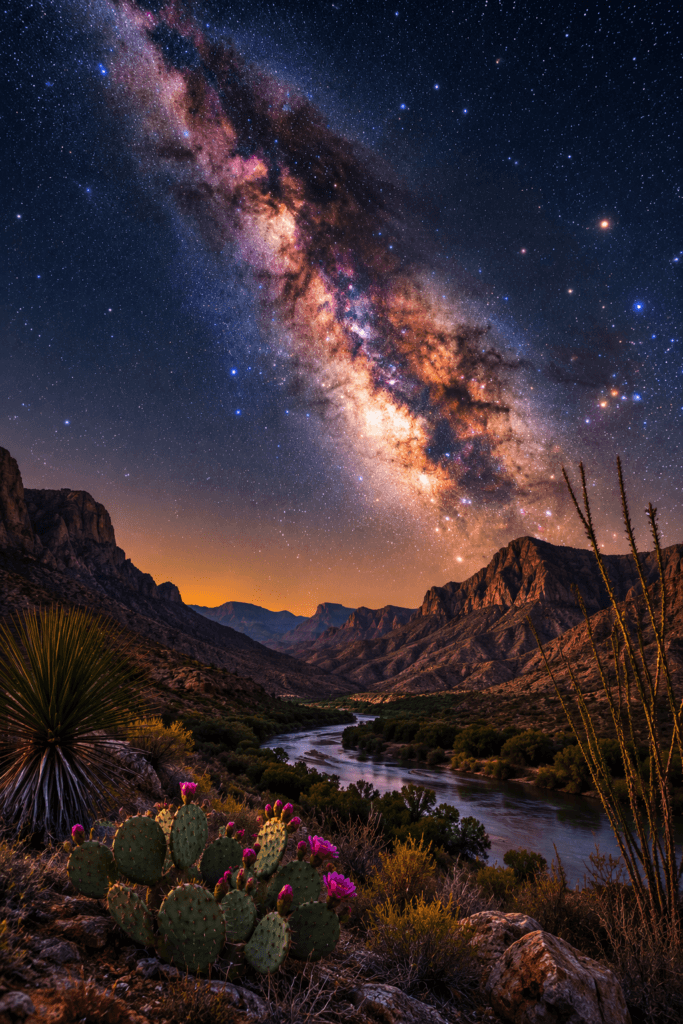
Big Bend National Park is widely recognized as one of the darkest national parks in the United States. Located in remote West Texas along the Rio Grande, the park offers exceptionally low light pollution, vast desert landscapes, and some of the most spectacular night skies in North America.
Covering more than 800,000 acres, Big Bend provides stargazers with enormous viewing areas free from urban light interference. The combination of desert climate, clear skies, and geographic isolation makes it one of the premier astronomy destinations in the country.
Whether you’re interested in Milky Way photography, meteor showers, or simply experiencing a truly dark night sky, Big Bend National Park offers unforgettable opportunities throughout the year.
Why Big Bend National Park Is Famous for Stargazing
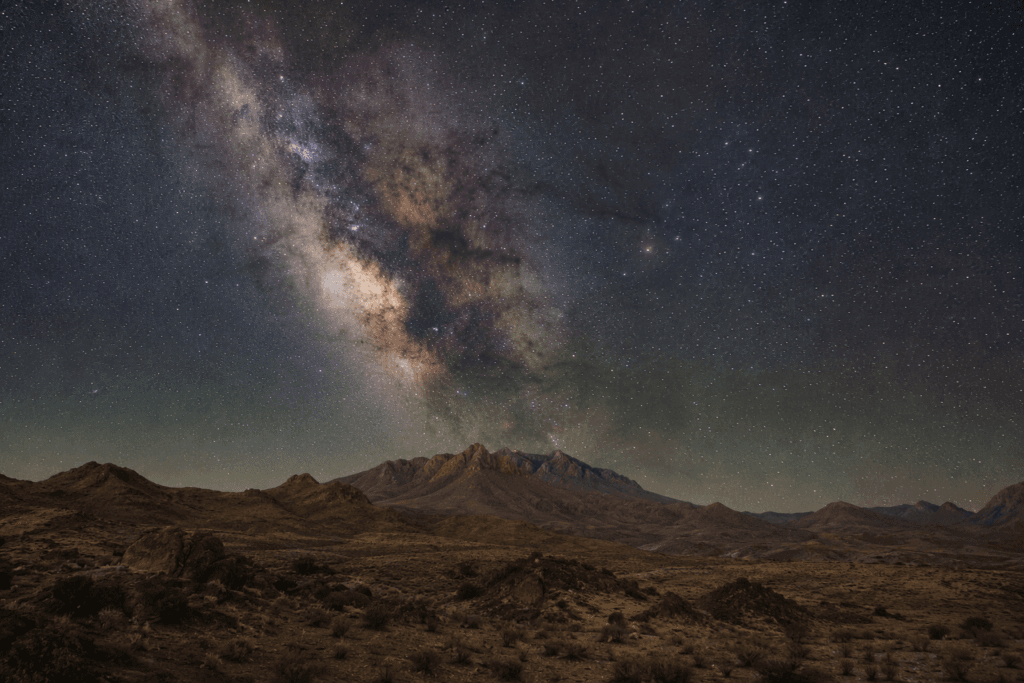
Big Bend’s reputation comes from its remarkable darkness. The park is located hundreds of miles from major metropolitan areas, allowing natural darkness to dominate the landscape.
- Extremely low light pollution
- Remote desert location
- Dry climate and clear skies
- Wide-open viewing horizons
- Large protected wilderness area
- Excellent Milky Way visibility
These conditions make Big Bend one of the best locations in America for astronomy and astrophotography. Travelers interested in similar destinations can also explore other Dark Sky Parks throughout the western United States.
Best Time to Visit Big Bend for Stargazing
Spring
Spring offers comfortable temperatures and excellent visibility. The Milky Way begins appearing during the early morning hours and gradually becomes more prominent.
Summer
Summer is peak Milky Way season. The galactic core becomes highly visible after sunset and remains visible for much of the night.
Visitors planning a Texas astronomy trip should also review our Best Time to See the Milky Way in Texas guide.
Fall
Fall brings cooler temperatures and stable atmospheric conditions, making it a favorite season for astrophotographers.
Winter
Winter provides some of the darkest skies of the year. While the Milky Way core is less prominent, winter constellations become excellent observing targets.
Best Stargazing Locations in Big Bend National Park
Rio Grande Village
Rio Grande Village is one of the park’s most popular stargazing areas and frequently hosts astronomy programs.
Chisos Basin
Surrounded by mountains, Chisos Basin provides dramatic landscapes that are ideal for astrophotography.
Panther Junction Area
This central region of the park offers excellent access and dark horizons in multiple directions.
Ross Maxwell Scenic Drive
Several pullouts along the scenic drive provide outstanding opportunities for Milky Way photography.
Milky Way Viewing at Big Bend National Park
Big Bend is one of the best places in Texas to see the Milky Way. The season generally runs from March through October, with peak visibility occurring between June and August.
The galactic core often appears exceptionally bright due to the park’s extremely dark skies and minimal atmospheric interference.
For annual planning, see our Milky Way Viewing Calendar USA.
Visitors comparing Southwest destinations may also wish to review our Best Time to See the Milky Way in New Mexico guide.
Astrophotography Opportunities
Big Bend is one of the most photogenic night photography destinations in America.
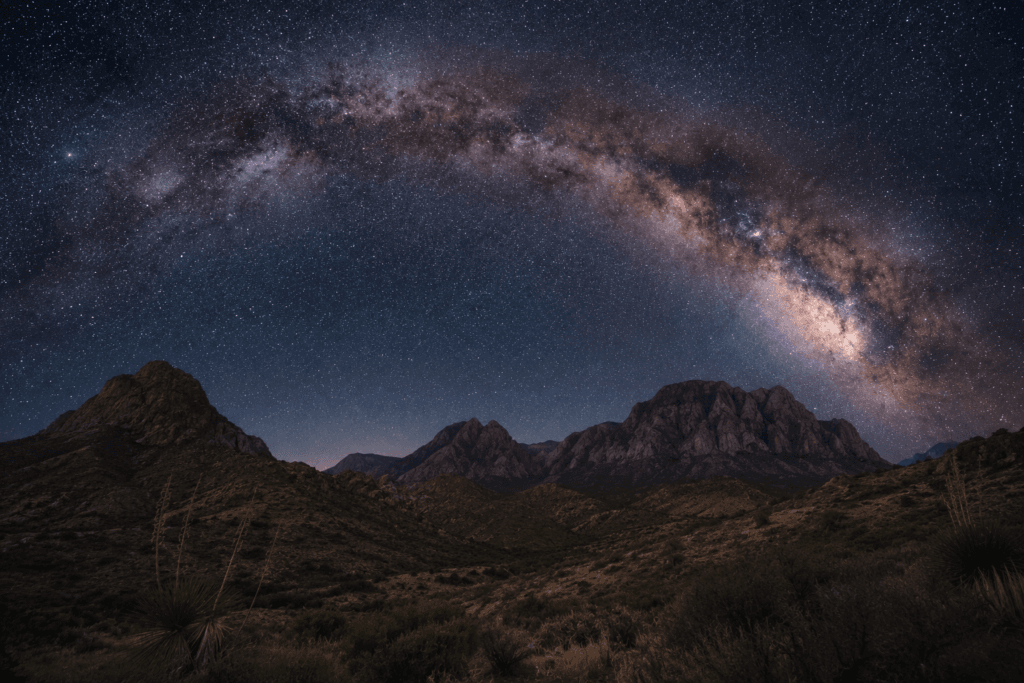
- Milky Way over desert mountains
- Star trails above canyon landscapes
- Rio Grande foreground compositions
- Desert nightscapes
- Meteor shower photography
The combination of rugged terrain and pristine skies creates endless photographic possibilities.
Additional equipment and photography recommendations are available in our Astrophotography category.
Meteor Shower Viewing
Big Bend’s dark skies make it one of the best places in Texas for observing annual meteor showers.
- Perseids
- Geminids
- Orionids
- Leonids
Low light pollution allows visitors to see significantly more meteors than in urban environments.
Peak dates and annual forecasts can be found in our Meteor Showers section.
Stargazing Tips
- Bring plenty of water
- Use red-light flashlights
- Check moon phases before your trip
- Arrive before sunset
- Download offline maps
- Allow time for dark adaptation
Because of the park’s remote location, preparation is essential for a safe and enjoyable astronomy experience.
Is Big Bend National Park Worth Visiting?
Absolutely. Big Bend National Park offers some of the darkest skies in the United States and consistently ranks among the nation’s best astronomy destinations.
For travelers building a larger dark sky road trip, Big Bend pairs well with destinations featured in our Arizona and Colorado Milky Way guides.
Frequently Asked Questions
Is Big Bend National Park good for stargazing?
Yes. Big Bend is considered one of the best dark sky destinations in the United States.
When is the best time to see the Milky Way at Big Bend?
The best viewing period generally runs from June through August.
Do I need a telescope?
No. Many celestial objects and the Milky Way are clearly visible with the naked eye.
Which area is best for stargazing?
Rio Grande Village, Chisos Basin, Panther Junction, and Ross Maxwell Scenic Drive are all excellent locations.
Plan your trip within five nights of the new moon and choose Bortle 1–3 locations for the best Milky Way visibility.