Best Time to See the Milky Way in New Mexico
New Mexico is widely considered one of the best states in America for Milky Way viewing. Thanks to its high […]
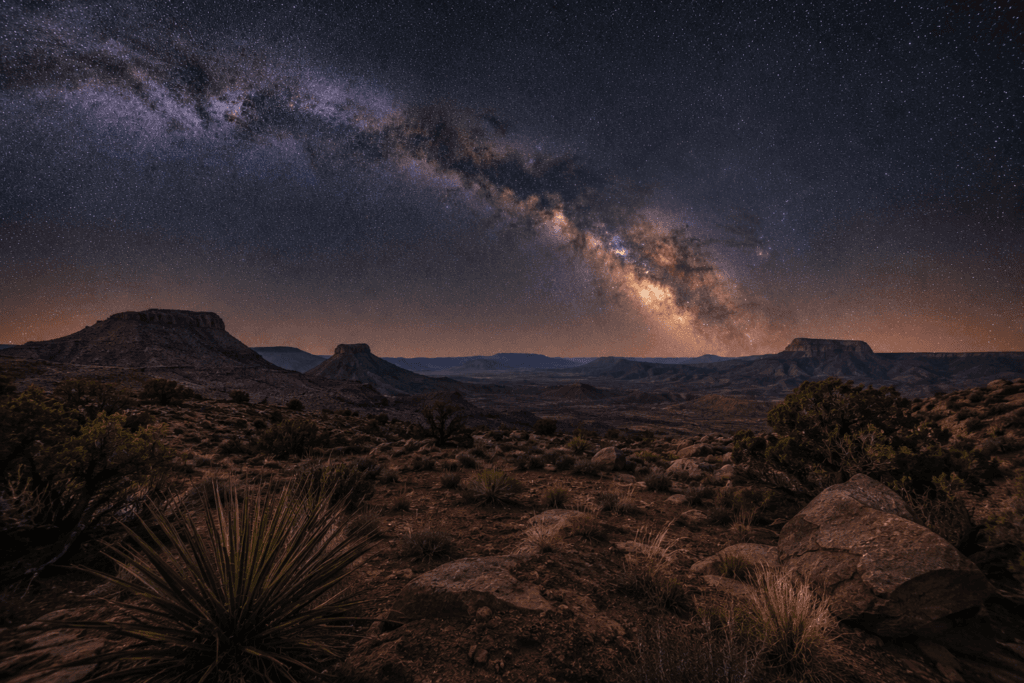
New Mexico is widely considered one of the best states in America for Milky Way viewing. Thanks to its high elevations, dry climate, remote desert landscapes, and low levels of light pollution, visitors can enjoy some of the darkest skies in the country. Whether you are planning a photography trip or simply want to experience the beauty of the night sky, understanding the best time to see the Milky Way in New Mexico can dramatically improve your chances of a memorable viewing experience.
When Is the Best Time to See the Milky Way in New Mexico?
The Milky Way is technically visible during much of the year, but the bright galactic core—the most spectacular part—appears seasonally.
In New Mexico, the best viewing season generally runs from March through October. However, the peak months are:
- May
- June
- July
- August
During these months, the galactic core rises higher in the sky and remains visible for longer periods during the night.
For a complete nationwide overview, see our Milky Way Viewing Calendar USA.
Monthly Milky Way Visibility in New Mexico
March and April
The Milky Way core begins appearing before sunrise. Viewing windows are shorter, but skies are often exceptionally clear.
May and June
Many experienced stargazers consider this the beginning of prime Milky Way season. The galactic center becomes easier to see and remains visible for longer periods.
July and August
These are often the best months overall. The Milky Way core is visible for most of the night and reaches impressive heights above the horizon.
September and October
Excellent viewing conditions continue, although the core begins setting earlier each evening.
What Makes New Mexico One of the Best States for Milky Way Viewing?
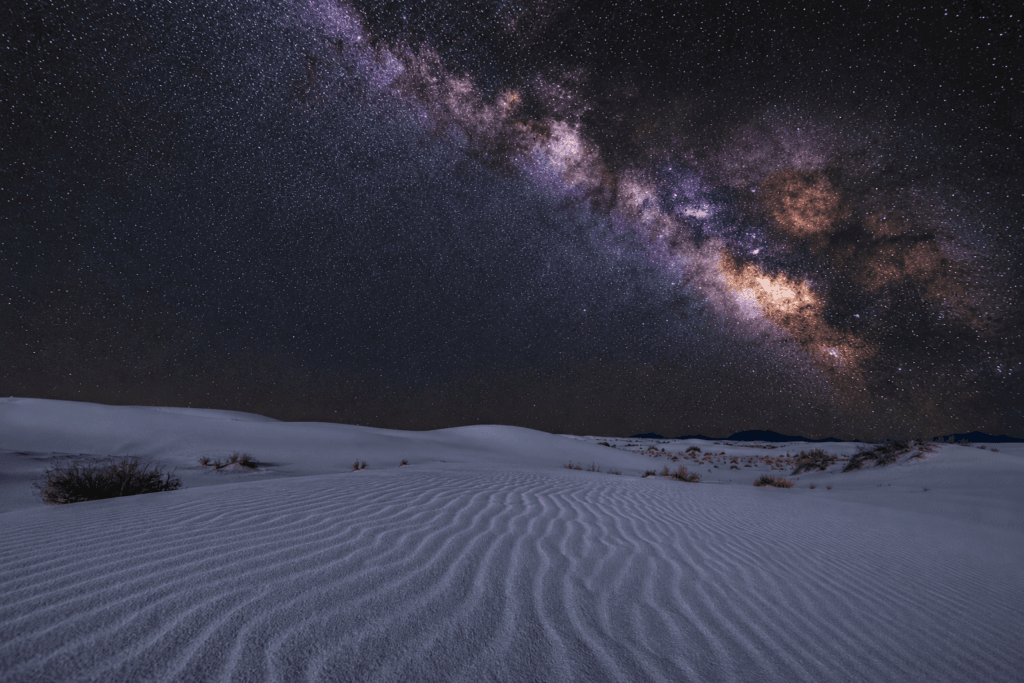
Several factors combine to make New Mexico exceptional for astronomy enthusiasts:
- High elevation desert environments
- Extremely low humidity
- Large remote regions with little development
- Numerous protected dark sky areas
- Consistently clear weather patterns
These conditions often provide darker and more stable skies than many other parts of the United States.
Best Places to See the Milky Way in New Mexico
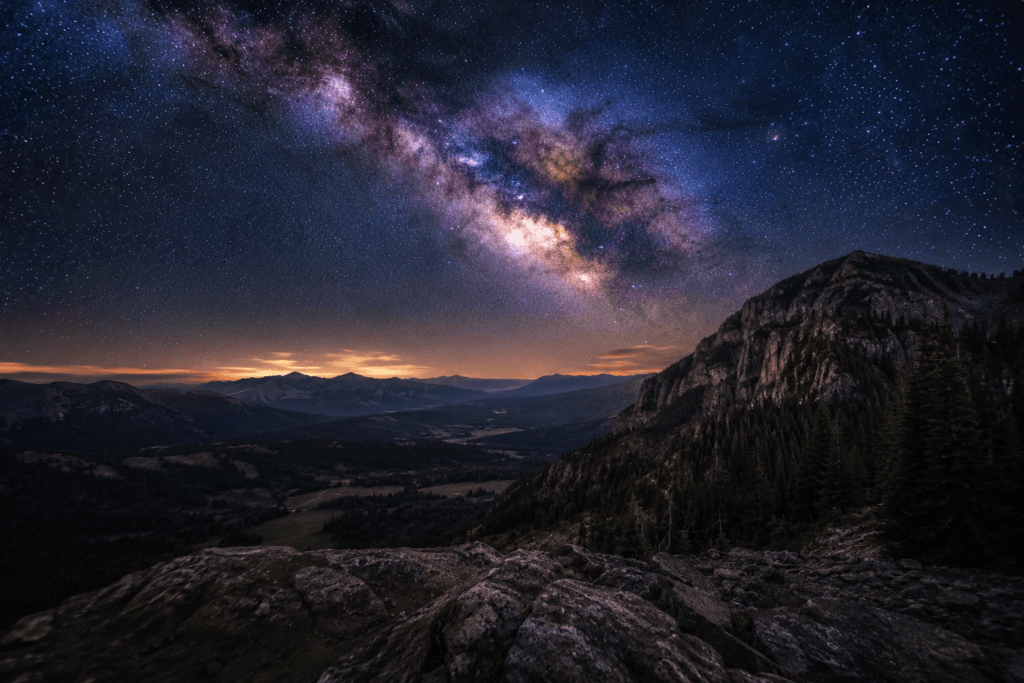
White Sands National Park
The bright white dunes create a unique foreground for night photography while surrounding darkness provides excellent sky visibility.
Cosmic Campground
One of the most famous astronomy destinations in America, Cosmic Campground was specifically designed for dark sky observation.
Chaco Culture National Historical Park
This remote location combines ancient history with some of the darkest skies in the Southwest.
Gila National Forest
Large wilderness areas and minimal artificial lighting make this region a favorite among serious stargazers.
Capulin Volcano National Monument
The elevated viewing opportunities provide excellent horizons for observing the Milky Way.
Many of these locations also appear in our guides to Dark Sky Parks and top Stargazing Locations.
Moon Phases Matter More Than Most People Realize
Even in extremely dark locations, a bright moon can significantly reduce Milky Way visibility.
For the best results:
- Plan around a new moon.
- Avoid nights near the full moon.
- Check moonrise and moonset times before traveling.
The darkest nights often reveal far more detail within the Milky Way’s dust lanes and star clouds.
Best Time for Milky Way Photography in New Mexico
Photographers generally find that June through August provides the best opportunities.
Popular photography advantages include:
- Long viewing windows
- High galactic core position
- Predictable weather patterns
- Dramatic desert and mountain foregrounds
New Mexico’s unique combination of landscapes and dark skies makes it one of the most photogenic Milky Way destinations in North America.
Weather Considerations
Although New Mexico enjoys many clear nights, weather can still affect visibility.
- Spring generally offers stable conditions.
- Summer may bring localized monsoon storms.
- Autumn often provides excellent transparency.
- Winter skies remain dark but the galactic core is mostly absent.
Always check local forecasts before traveling to remote viewing locations.
Final Thoughts
If your goal is to see the Milky Way at its best, New Mexico should be near the top of your list. The combination of dark skies, dry air, high elevations, and iconic desert scenery creates ideal conditions for both casual stargazing and advanced astrophotography.
For most visitors, June through August offers the best balance of visibility, weather, and viewing opportunities. Planning your trip around a new moon and choosing a remote dark sky destination can make the experience even more unforgettable.
Frequently Asked Questions
What is the best month to see the Milky Way in New Mexico?
July is often considered the best month because the galactic core is visible for much of the night.
Can you see the Milky Way from Albuquerque?
Light pollution limits visibility within the city, but nearby dark sky locations provide excellent viewing opportunities.
Is White Sands good for Milky Way photography?
Yes. White Sands National Park is one of the most popular Milky Way photography locations in New Mexico.
Do I need a telescope to see the Milky Way?
No. The Milky Way can be seen with the naked eye from sufficiently dark locations.
What moon phase is best for viewing the Milky Way?
A new moon or nights close to a new moon generally provide the darkest skies and best visibility.
Plan your trip within five nights of the new moon and choose Bortle 1–3 locations for the best Milky Way visibility.