Best Time to See the Milky Way in Arizona
Arizona is one of the best places in the United States to see the Milky Way. The state has dry […]
Arizona is one of the best places in the United States to see the Milky Way. The state has dry desert air, high-elevation viewpoints, wide-open landscapes, and several areas with very low light pollution. But even in Arizona, the Milky Way is not equally visible every night of the year. The best experience depends on the month, moon phase, weather, and how far you are from city lights.
The best time to see the Milky Way in Arizona is usually from April through September, with the strongest viewing conditions often in May, June, July, and August. For the clearest view, plan your trip within a few nights of the new moon and choose a dark location away from Phoenix, Tucson, Flagstaff, or other bright urban areas.
For a broader national overview, start with our Milky Way Viewing Calendar USA. This Arizona guide goes deeper into the state-specific timing, regions, locations, and planning details.
Quick Answer: When Is the Best Time to See the Milky Way in Arizona?
The best time to see the Milky Way in Arizona is during moonless nights from late spring through early fall. May through August usually provides the strongest combination of visibility, weather, and viewing time. September can also be excellent, especially because the Milky Way becomes visible earlier in the evening.
If you want the simplest planning rule, choose a new moon window between May and September and visit a dark sky location in northern, central, or southern Arizona. Avoid full moon periods, cloudy nights, and locations close to major city light domes.
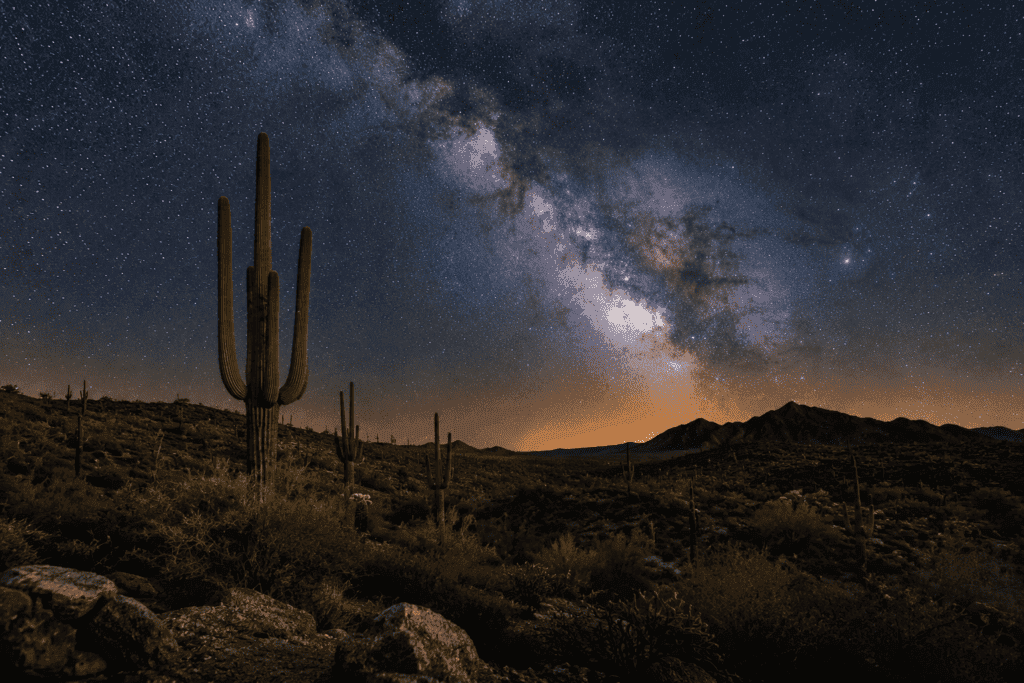
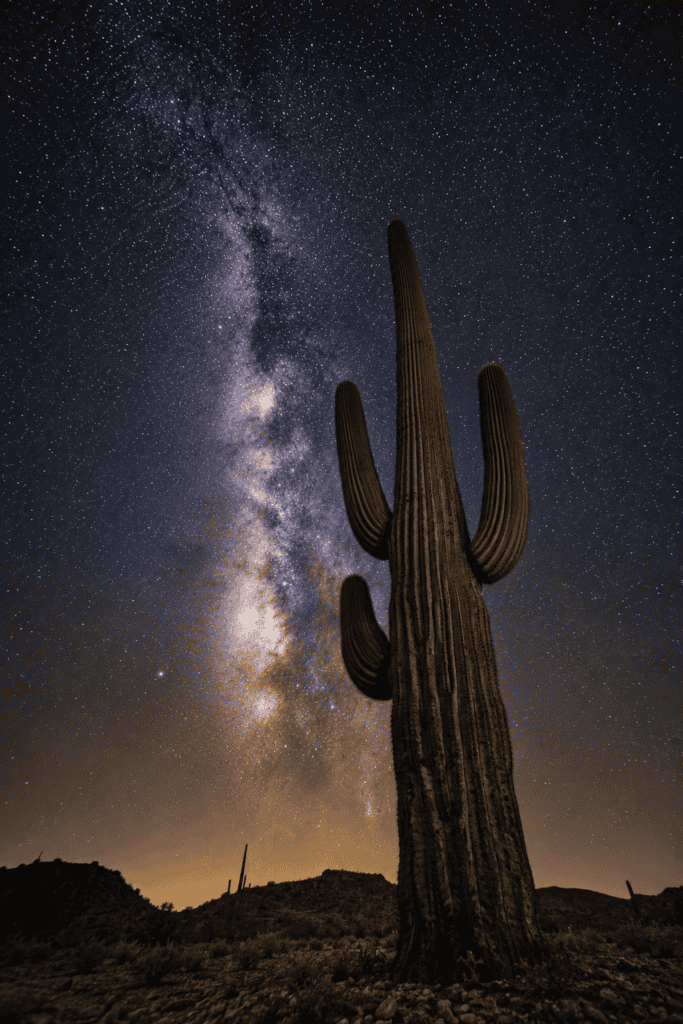
Arizona is especially strong for Milky Way viewing because many of its best locations combine dark skies with dramatic foregrounds such as saguaro cactus, red rocks, desert valleys, canyon rims, and mountain silhouettes.
When Is Milky Way Season in Arizona?
Milky Way season in Arizona generally begins in late winter and continues into fall. The galactic core, which is the bright and most recognizable part of the Milky Way, becomes easier to see as spring progresses. By late spring and summer, it is visible for longer periods during the night.
In February and March, the Milky Way core may be visible before dawn, especially from darker southern areas. April is often the first strong month for serious viewing. May, June, July, and August are peak months. September remains very good, while October can still offer late-season opportunities, but the viewing window becomes shorter.
Winter is not useless for stargazing in Arizona, but it is not the best season for viewing the bright Milky Way core. Winter skies are better for constellations, planets, and general night sky observation.
Arizona Milky Way Calendar by Month
| Month | Milky Way Visibility in Arizona | Best Use |
|---|---|---|
| January | Limited | Better for winter stars than Milky Way core viewing |
| February | Early morning visibility begins | Possible for dedicated early risers in dark southern areas |
| March | Improving | Good early-season planning month |
| April | Good | Strong start for Arizona Milky Way trips |
| May | Very good | One of the best months for viewing and photography |
| June | Excellent | Peak viewing season with long nighttime visibility |
| July | Excellent | Outstanding Milky Way visibility, weather permitting |
| August | Excellent | Excellent viewing with possible meteor shower overlap |
| September | Very good | Great early evening viewing window |
| October | Moderate | Late-season viewing possible after sunset |
| November | Limited | Milky Way core visibility fades |
| December | Limited | Better for general winter stargazing |
Best Months for Milky Way Viewing in Arizona
The strongest months for seeing the Milky Way in Arizona are usually May, June, July, August, and September. These months give you the best chance to see the galactic core under dark skies.
May is one of the best months because the Milky Way becomes easier to see while temperatures are still more comfortable in many areas. June and July provide peak visibility, but you should plan carefully around summer heat, especially in desert regions. August remains excellent and may overlap with major meteor activity. September is especially useful because the Milky Way is often visible earlier in the evening.
April is a strong early-season option, especially in southern Arizona. October can still work, but the viewing window is shorter and the Milky Way core sets earlier.
Best Regions in Arizona for Milky Way Viewing
Arizona has several strong Milky Way regions, and each one offers a different experience. Some areas are better for accessibility, while others are better for deep darkness, photography, or dramatic landscapes.
Northern Arizona
Northern Arizona is one of the strongest regions for stargazing in the state. It includes Flagstaff, the Grand Canyon region, the Painted Desert, and high-elevation landscapes with cooler nighttime temperatures. This region is especially good for travelers who want a combination of dark skies and iconic scenery.
Flagstaff is important because of its long history with dark sky awareness and astronomy. The surrounding region offers many viewing opportunities if you move away from direct city lights.
Central Arizona
Central Arizona can be excellent if you travel away from Phoenix and nearby urban light pollution. Areas north and east of the metro region may provide much darker skies, especially in remote desert or mountain locations.
This region is useful for visitors who want a shorter trip from Phoenix but still want better night sky visibility than they would get near the city.
Southern Arizona
Southern Arizona is extremely strong for Milky Way viewing because of its dry climate, desert landscapes, and major astronomy presence. The Tucson region has light pollution, but darker areas outside the city can be excellent.
Places such as Organ Pipe Cactus National Monument, Chiricahua National Monument, and remote desert areas can provide memorable Milky Way experiences during the right moon phase.
Best Places to See the Milky Way in Arizona
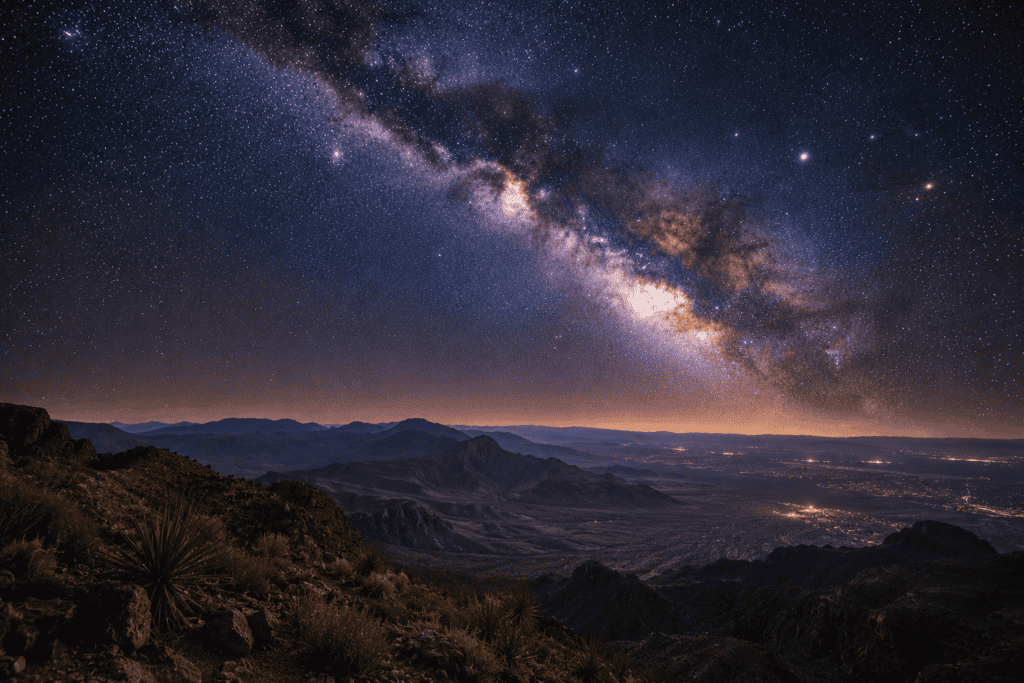
Arizona has many strong Milky Way destinations. The best choice depends on your travel style, comfort level, and whether you want easy access or deeper darkness.
Grand Canyon National Park
Grand Canyon National Park is one of the most iconic places in the United States to experience the night sky. The canyon rim creates a dramatic foreground, and the surrounding region can be very dark compared with urban areas.
For Milky Way viewing, plan around the new moon and avoid areas with heavy visitor lighting. Arrive before dark, choose a safe viewpoint, and stay aware of canyon edges at night.
Flagstaff Region
The Flagstaff region is one of Arizona’s most important astronomy areas. While the city itself has some light, the surrounding landscapes can offer excellent viewing when you move away from direct urban glow.
This is a strong choice for travelers who want a practical base with lodging, food, and access to multiple stargazing routes.
Sedona Area
Sedona can be a beautiful place for Milky Way viewing and photography because of its red rock formations. The main town has light pollution, so the best results usually come from darker viewpoints outside the busiest areas.
Sedona is especially good for photographers who want dramatic foregrounds, but careful planning is important because popular locations can be busy.
Petrified Forest National Park
Petrified Forest National Park offers open horizons and a remote desert atmosphere. It can be a strong option for night sky viewing when conditions are clear and moonlight is low.
The wide landscape gives the Milky Way room to stretch across the sky, making it useful for both naked-eye viewing and wide-angle photography.
Chiricahua National Monument
Chiricahua National Monument in southeastern Arizona offers rugged rock formations and darker skies than many more developed destinations. It can be a rewarding Milky Way location for visitors willing to travel farther from major cities.
Organ Pipe Cactus National Monument
Organ Pipe Cactus National Monument is one of the most distinctive desert locations in Arizona. The cactus-filled landscape creates a powerful foreground for Milky Way photography, especially during peak season.
Because this area is remote and desert conditions can be harsh, plan carefully with water, navigation, and safety in mind.
How Moon Phases Affect Milky Way Visibility
Moon phase is one of the most important details in any Arizona Milky Way plan. A full moon can brighten the sky enough to hide much of the Milky Way, even in a remote dark location.
The best nights are usually during the new moon or within a few nights before and after it. A crescent moon may still be workable if it sets early or rises after your main viewing window. The worst timing is usually a bright moon high in the sky during the hours you want to observe.
Before booking lodging or driving several hours, check the moon phase. A dark location during a full moon can be less impressive than a moderately dark location during a new moon.
Arizona Weather and Sky Conditions
Arizona often has excellent stargazing weather, but conditions still vary by region and season. Dry air helps night sky clarity, but clouds, dust, wildfire smoke, monsoon storms, and summer haze can all affect visibility.
Spring often provides a strong mix of clear skies and reasonable temperatures. Summer has excellent Milky Way visibility, but southern and low-elevation desert areas can be extremely hot. Late summer can also bring monsoon activity, especially in parts of the state.
High-elevation areas such as northern Arizona may be cooler and more comfortable at night, but temperatures can drop quickly after sunset. Always bring layers, even when the daytime temperature feels warm.
Milky Way Photography Tips for Arizona
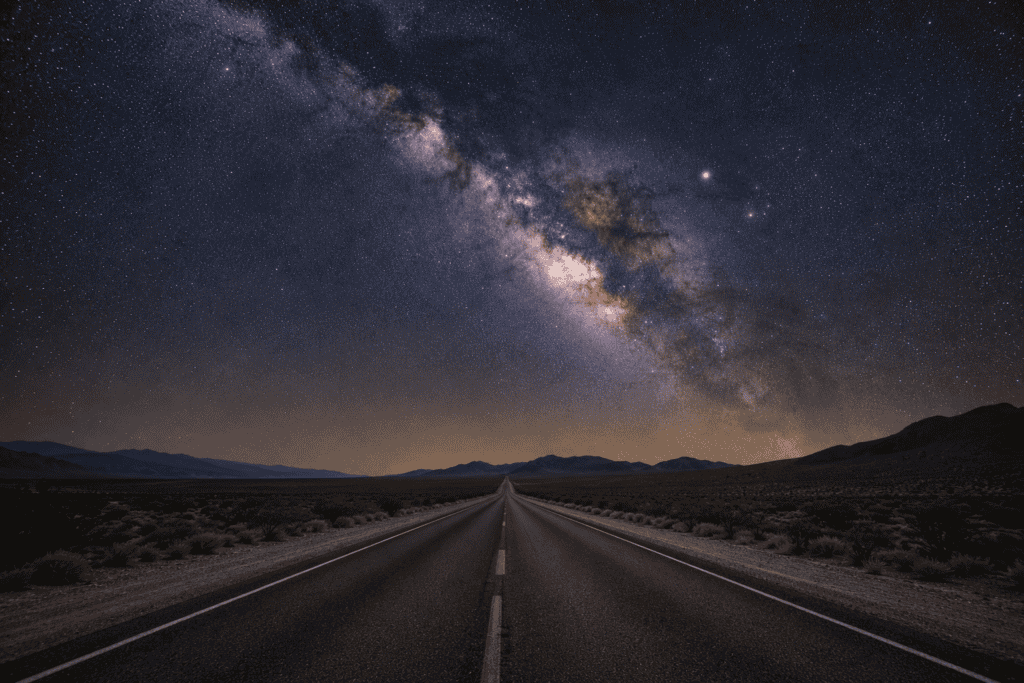
Arizona is one of the best states for Milky Way photography because the landscapes are visually powerful. Saguaro cactus, red rocks, canyons, desert roads, mountain silhouettes, and open valleys can all create strong foreground compositions.
For better Milky Way photos in Arizona, plan your composition before dark. Arrive during daylight, identify safe places to stand, and frame your foreground before the sky becomes fully dark.
Use a tripod, manual focus, a wide-angle lens, and a long exposure. Avoid bright white lights because they can ruin your night vision and disturb other stargazers. A red-light flashlight is usually better for moving around safely.
If you are new to night sky photography, the broader Astrophotography section will help with camera settings, beginner gear, and Milky Way shooting techniques.
Planning a Milky Way Trip in Arizona
A good Arizona Milky Way trip starts with timing. First choose a peak viewing month, then choose a new moon window, then choose the location. Many beginners do this in the wrong order by picking a destination first and checking the moon later.
A simple planning process looks like this:
- Choose a month between April and September.
- Check the new moon date.
- Select a location away from city lights.
- Check cloud cover, smoke, and weather forecasts.
- Arrive before sunset.
- Bring water, warm layers, a red-light flashlight, and navigation tools.
- Allow your eyes 20–30 minutes to adjust to the dark.
If you are still comparing destinations, browse our Stargazing Locations guides. If you specifically want protected night sky destinations, explore Dark Sky Parks. For more Milky Way planning resources, visit our Milky Way Viewing category.
Frequently Asked Questions
What is the best month to see the Milky Way in Arizona?
June, July, and August are usually among the strongest months to see the Milky Way in Arizona. May and September can also be excellent, especially during new moon periods.
Can you see the Milky Way from Sedona?
Yes, you can see the Milky Way from the Sedona area, but the best results usually come from darker viewpoints outside the brightest parts of town.
Can you see the Milky Way from the Grand Canyon?
Yes. Grand Canyon National Park can offer excellent Milky Way viewing when skies are clear and the moon is not bright.
Do you need a telescope to see the Milky Way in Arizona?
No. The Milky Way is best viewed with the naked eye from a dark location. A telescope is not required.
What moon phase is best for seeing the Milky Way?
The new moon is best because the sky is darkest. Nights close to the new moon are also good if the moon is not above the horizon during your viewing window.
Is Arizona better than Utah for Milky Way viewing?
Both Arizona and Utah are excellent. Arizona often has dry weather and strong astronomy infrastructure, while Utah offers many iconic dark sky landscapes and national parks.
Where are the darkest skies in Arizona?
Some of Arizona’s darkest skies are found in remote desert regions, parts of northern Arizona, the Grand Canyon region, and areas far from Phoenix and Tucson.
Can beginners see the Milky Way in Arizona?
Yes. Beginners can see the Milky Way in Arizona by choosing a dark location, visiting near the new moon, and allowing their eyes time to adjust to the darkness.
Plan your trip within five nights of the new moon and choose Bortle 1–3 locations for the best Milky Way visibility.