Big Cypress National Preserve Stargazing Guide
Big Cypress National Preserve is one of Florida’s best-kept secrets for stargazing. Located just north of Everglades National Park, this […]
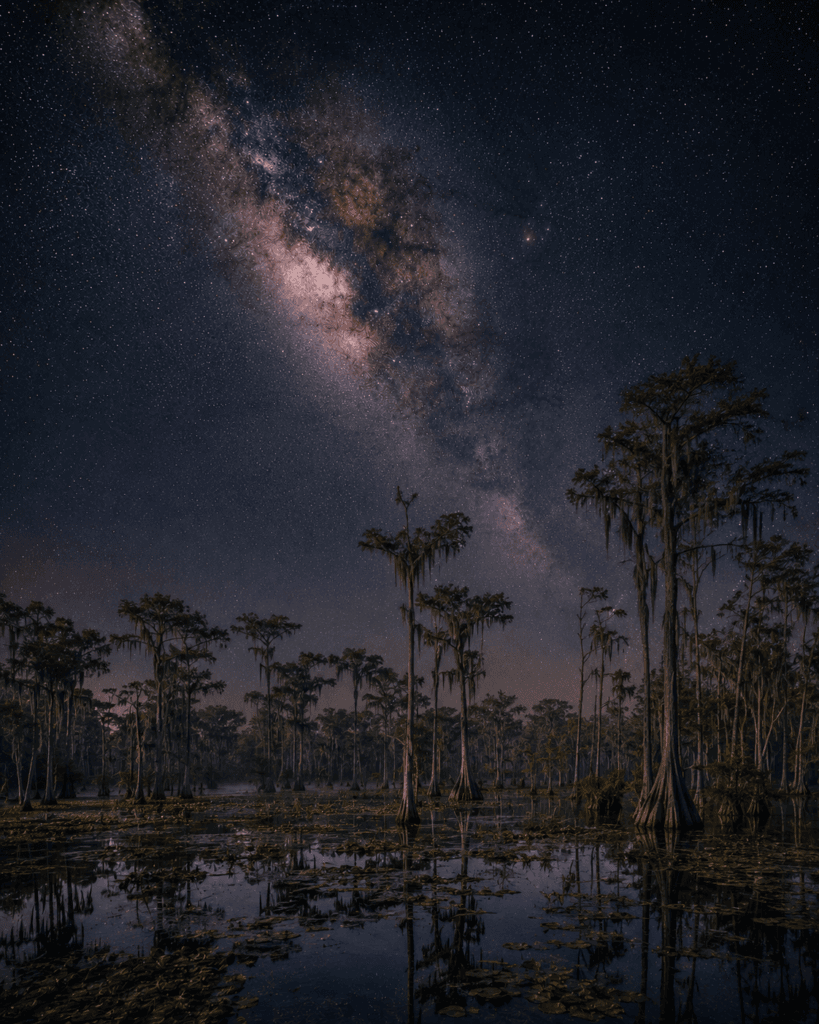
Big Cypress National Preserve is one of Florida’s best-kept secrets for stargazing. Located just north of Everglades National Park, this vast subtropical wilderness offers some of the darkest skies in the southeastern United States and provides exceptional opportunities for astronomy, astrophotography, and Milky Way viewing.
Unlike many eastern destinations affected by significant light pollution, Big Cypress benefits from protected wilderness areas and relatively low population density. On clear nights, visitors can observe thousands of stars, bright planets, meteor showers, and the Milky Way stretching across the Florida sky.
For travelers seeking dark skies without traveling to the deserts of the American West, Big Cypress National Preserve is one of the most rewarding astronomy destinations east of the Mississippi River.
Why Big Cypress National Preserve Is Great for Stargazing
The preserve offers a rare combination of protected wilderness and dark skies in a region where urban development continues to expand.
- Very low light pollution
- Large protected wilderness area
- Wide-open viewing horizons
- Excellent Milky Way visibility for Florida
- Accessible astronomy locations
- Outstanding meteor shower viewing
These conditions make Big Cypress one of Florida’s premier astronomy destinations.
Visitors looking for additional astronomy destinations can also explore other Dark Sky Parks across the United States.
Best Time to Visit Big Cypress for Stargazing
Spring
Spring marks the beginning of Milky Way season and offers comfortable nighttime temperatures before Florida’s summer humidity arrives.
Summer
Summer provides the best Milky Way visibility. The galactic core becomes highly visible after sunset and remains prominent throughout much of the night.
Travelers planning a Florida astronomy trip should review our Best Time to See the Milky Way in Florida guide.
Fall
Fall combines warm temperatures with reduced thunderstorms and favorable astronomy conditions.
Winter
Winter skies are often exceptionally clear and comfortable, making this season ideal for observing constellations and deep-sky objects.
Best Stargazing Locations in Big Cypress National Preserve
Loop Road Scenic Drive
Loop Road provides multiple pull-off areas with dark skies and minimal artificial lighting.
Kirby Storter Area
This remote section of the preserve offers excellent opportunities for observing stars and photographing the Milky Way.
H.P. Williams Roadside Park
A convenient location for casual astronomy sessions with relatively open horizons.
Turner River Road
Turner River Road provides access to darker regions of the preserve and excellent night photography opportunities.
Milky Way Viewing at Big Cypress National Preserve
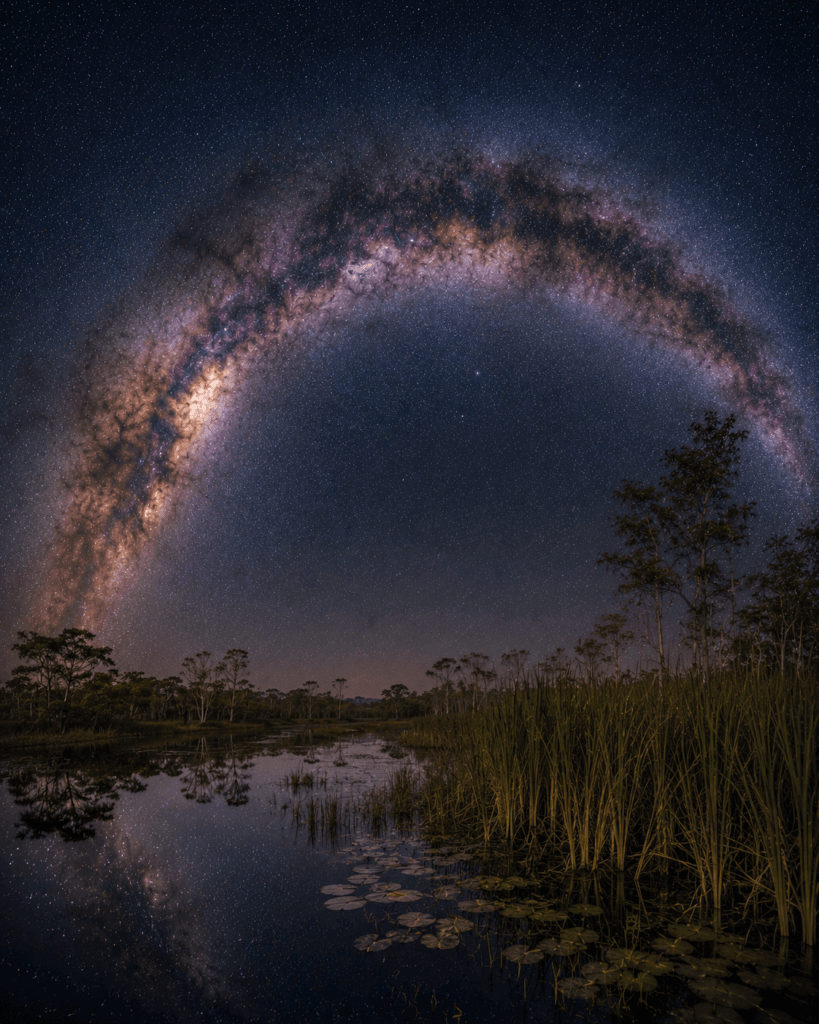
Big Cypress is one of Florida’s top locations for observing the Milky Way. The viewing season generally runs from March through October, with peak visibility occurring between May and August.
Moonless nights provide the best conditions for viewing the galactic core and photographing the Milky Way above the preserve’s unique landscapes.
For annual planning, review our Milky Way Viewing Calendar USA.
Astrophotography Opportunities
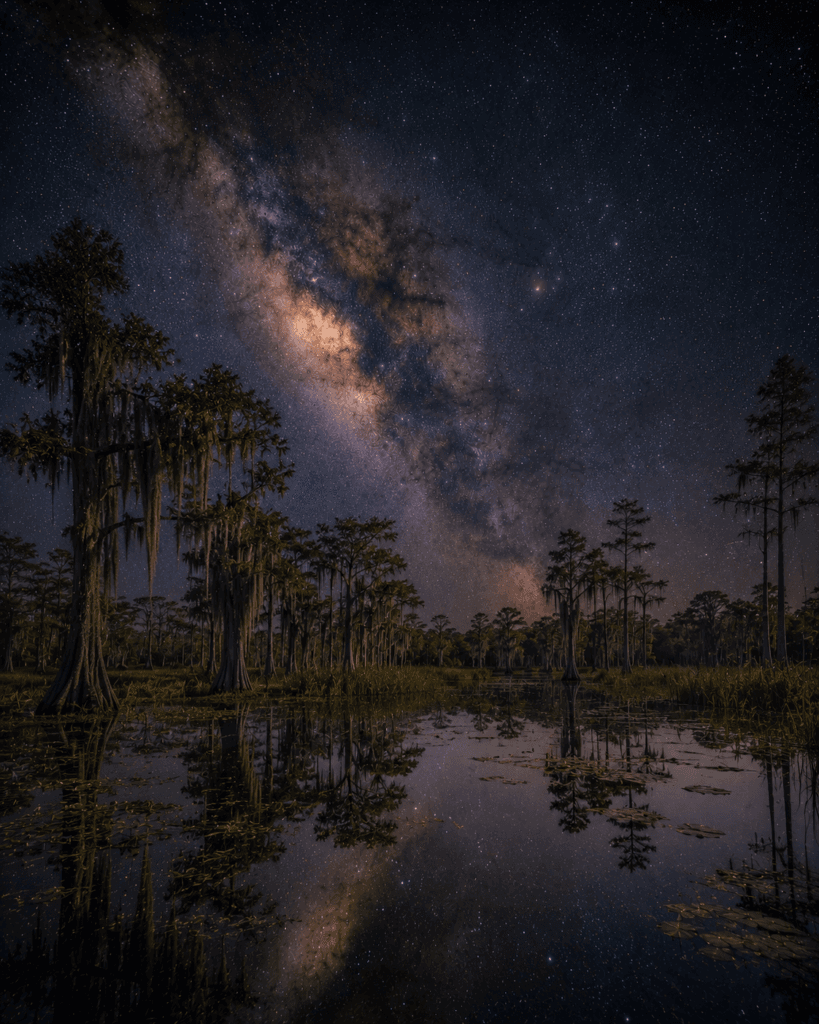
Big Cypress offers unique astrophotography opportunities rarely found elsewhere in the United States.
- Milky Way above cypress trees
- Star trails over wetlands
- Night reflections in waterways
- Meteor shower photography
- Subtropical night landscapes
The preserve’s distinctive ecosystem creates compositions that differ dramatically from western desert astronomy destinations.
Additional photography techniques can be found in our Astrophotography category.
Meteor Shower Viewing
Big Cypress provides excellent conditions for observing major annual meteor showers thanks to its dark skies and low light pollution.
- Perseids
- Geminids
- Orionids
- Leonids
Wide-open horizons allow visitors to observe meteors across large portions of the sky.
Peak dates and forecasts are available in our Meteor Showers section.
Stargazing Tips
- Bring insect repellent
- Use red-light flashlights
- Check moon phases before visiting
- Arrive before sunset
- Monitor weather forecasts
- Allow time for dark adaptation
Florida’s humidity and seasonal weather patterns can affect visibility, so flexibility is important when planning astronomy trips.
Is Big Cypress National Preserve Worth Visiting?
Absolutely. Big Cypress National Preserve offers some of the darkest skies in the southeastern United States and provides a unique astronomy experience unlike anywhere else in Florida.
Visitors interested in comparing dark sky conditions across different regions may also wish to review our Best Time to See the Milky Way in Texas guide.
Frequently Asked Questions
Is Big Cypress National Preserve good for stargazing?
Yes. It is one of Florida’s best dark sky destinations and offers excellent Milky Way visibility.
When is the best time to see the Milky Way?
The best viewing period generally runs from May through August.
Do I need a telescope?
No. Many stars and the Milky Way are visible with the naked eye under dark conditions.
What is the best stargazing location?
Loop Road Scenic Drive and Turner River Road are among the preserve’s most popular astronomy locations.
Plan your trip within five nights of the new moon and choose Bortle 1–3 locations for the best Milky Way visibility.