White Sands National Park Stargazing Guide
White Sands National Park is one of the most unique stargazing destinations in the United States. Located in southern New […]
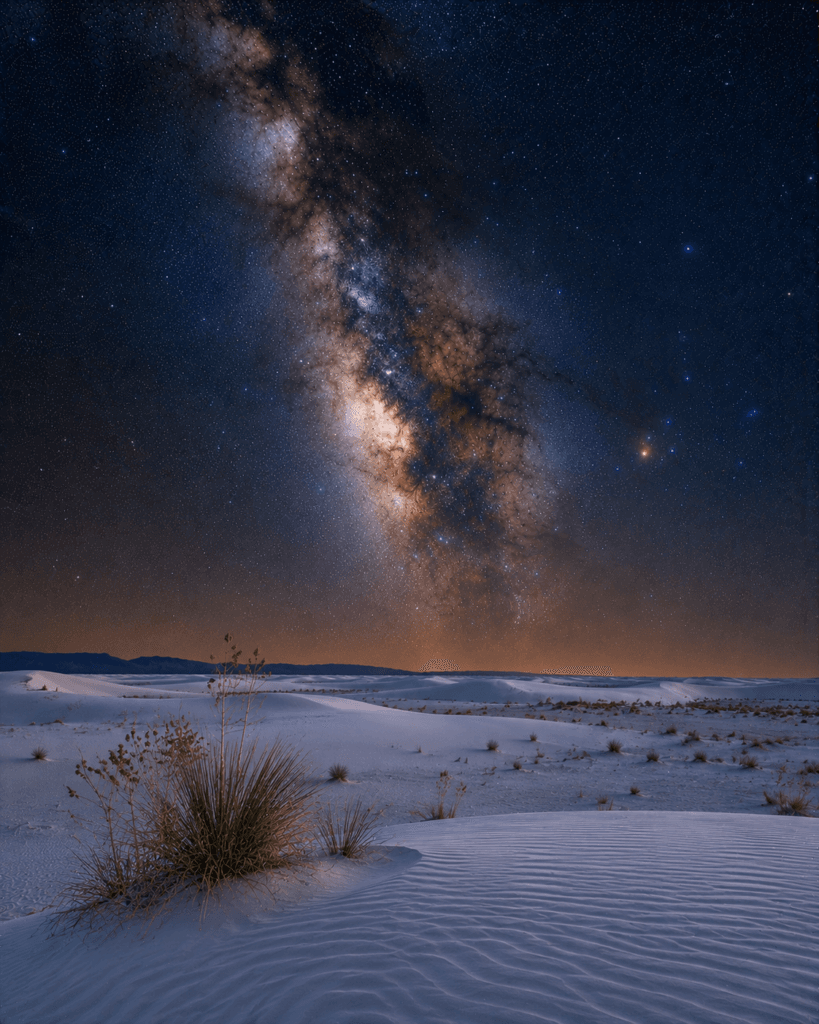
White Sands National Park is one of the most unique stargazing destinations in the United States. Located in southern New Mexico, the park protects the world’s largest gypsum dune field, creating an extraordinary landscape unlike anywhere else on Earth.
During the day, brilliant white dunes stretch across the desert horizon. At night, those same dunes become an incredible foreground for observing the Milky Way, meteor showers, planets, and thousands of stars beneath some of the darkest skies in the Southwest.
The combination of dark skies and surreal desert scenery makes White Sands one of America’s most photogenic astronomy destinations.
Why White Sands National Park Is Great for Stargazing
White Sands offers a unique combination of natural beauty and excellent astronomy conditions.
- Low light pollution
- Remote desert location
- Unique white gypsum dunes
- Excellent Milky Way visibility
- Wide-open horizons
- Outstanding astrophotography opportunities
The bright dunes create natural foreground contrast that enhances both visual observation and night photography.
Visitors interested in similar destinations can also explore other Dark Sky Parks throughout the United States.
Best Time to Visit White Sands for Stargazing
Spring
Spring offers comfortable nighttime temperatures and the beginning of prime Milky Way season.
Summer
Summer is peak Milky Way season. The galactic core becomes highly visible above the dunes and creates spectacular photography opportunities.
Travelers planning a New Mexico astronomy trip should review our Best Time to See the Milky Way in New Mexico guide.
Fall
Fall combines cooler weather, excellent visibility, and reduced visitor numbers compared to summer.
Winter
Winter offers exceptionally dark skies and long nights that are ideal for observing constellations and deep-sky objects.
Best Stargazing Locations in White Sands National Park
Dune Life Nature Trail Area
This region provides easy access to expansive dune fields and excellent night sky views.
Alkali Flat Trail
One of the most popular locations for astrophotography thanks to its remote and dramatic dune landscapes.
Interdune Boardwalk
The boardwalk area offers convenient access for casual stargazers and photographers.
Backcountry Dunes
Remote dune areas provide some of the darkest and most immersive astronomy experiences within the park.
Milky Way Viewing at White Sands
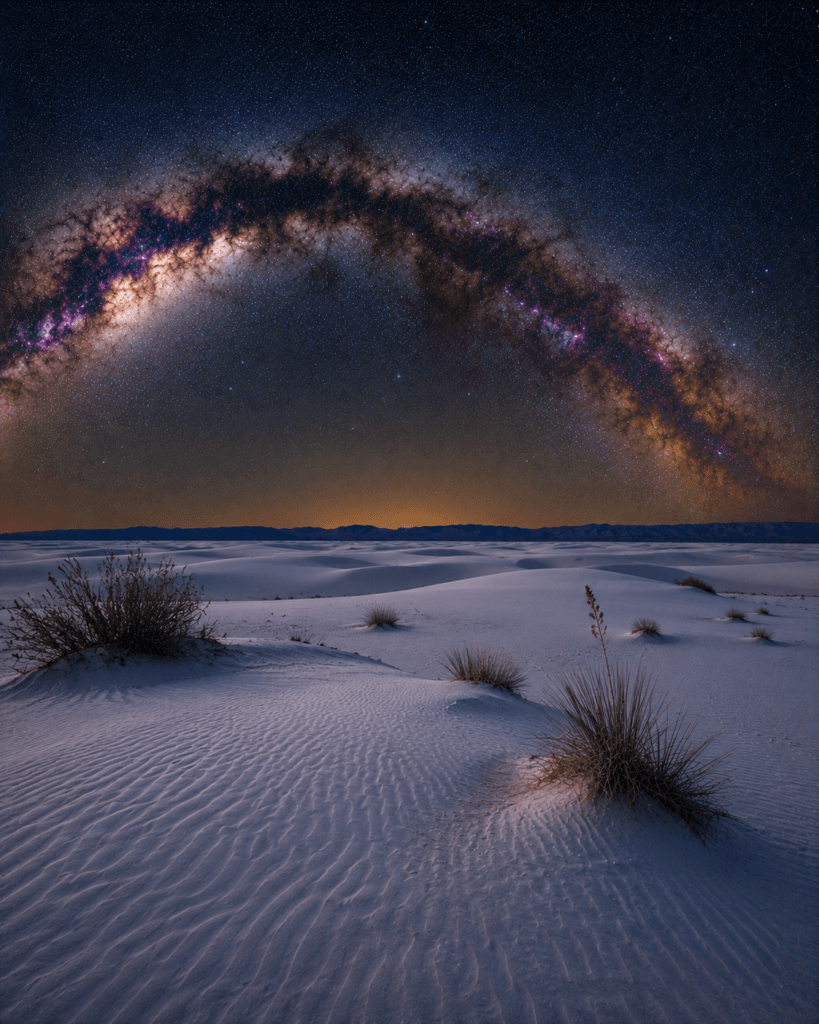
White Sands National Park is one of the best places in New Mexico to observe the Milky Way. The viewing season generally runs from March through October, with peak visibility occurring between May and August.
Moonless nights reveal the galactic core rising above brilliant white dunes, creating one of the most iconic astronomy scenes in the American Southwest.
For annual planning, review our Milky Way Viewing Calendar USA.
Astrophotography Opportunities
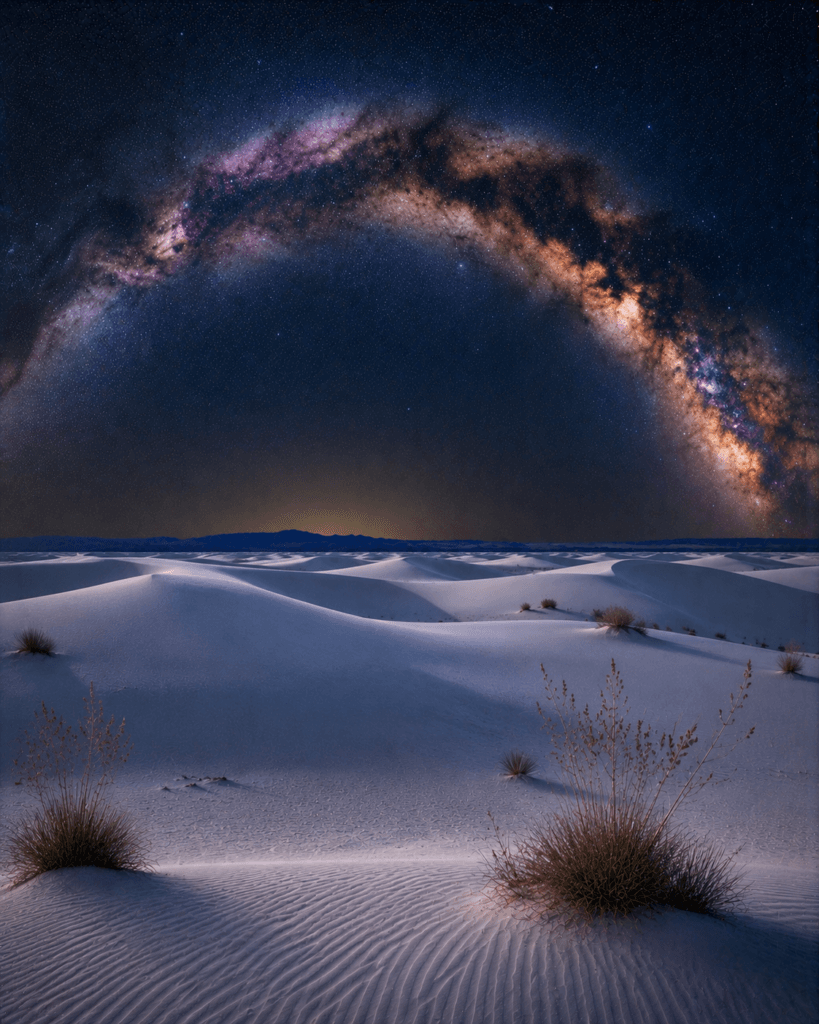
White Sands is considered a bucket-list destination for astrophotographers.
- Milky Way above white gypsum dunes
- Star trails over desert landscapes
- Meteor shower photography
- Wide-angle night panoramas
- Moonlit dune photography
The bright dune surfaces create extraordinary visual contrast against dark skies and dense star fields.
Additional photography techniques can be found in our Astrophotography category.
Meteor Shower Viewing
White Sands provides excellent visibility during major annual meteor showers.
- Perseids
- Geminids
- Orionids
- Leonids
Open desert horizons allow visitors to observe meteors across large sections of the sky.
Peak dates and forecasts are available in our Meteor Showers section.
Stargazing Tips
- Bring extra water
- Use red-light flashlights
- Check moon phases before visiting
- Wear appropriate footwear for dunes
- Carry extra camera batteries
- Allow time for dark adaptation
Desert temperatures can change significantly after sunset, so visitors should prepare accordingly.
Is White Sands National Park Worth Visiting?
Absolutely. White Sands National Park combines extraordinary landscapes, dark skies, and world-class astrophotography opportunities, making it one of the most unique astronomy destinations in North America.
Visitors comparing southwestern astronomy destinations may also wish to review our Big Bend National Park Stargazing Guide.
Frequently Asked Questions
Is White Sands National Park good for stargazing?
Yes. White Sands offers dark skies, wide-open horizons, and excellent Milky Way visibility.
When is the best time to see the Milky Way?
The best viewing period generally runs from May through August.
Can you photograph the Milky Way at White Sands?
Yes. White Sands is one of the most popular Milky Way photography locations in the American Southwest.
What is the best stargazing location?
Alkali Flat Trail and the remote dune fields are among the park’s top astronomy locations.
Plan your trip within five nights of the new moon and choose Bortle 1–3 locations for the best Milky Way visibility.