Joshua Tree National Park Stargazing Guide
Joshua Tree National Park is one of the most famous stargazing destinations in the United States. Located in Southern California […]
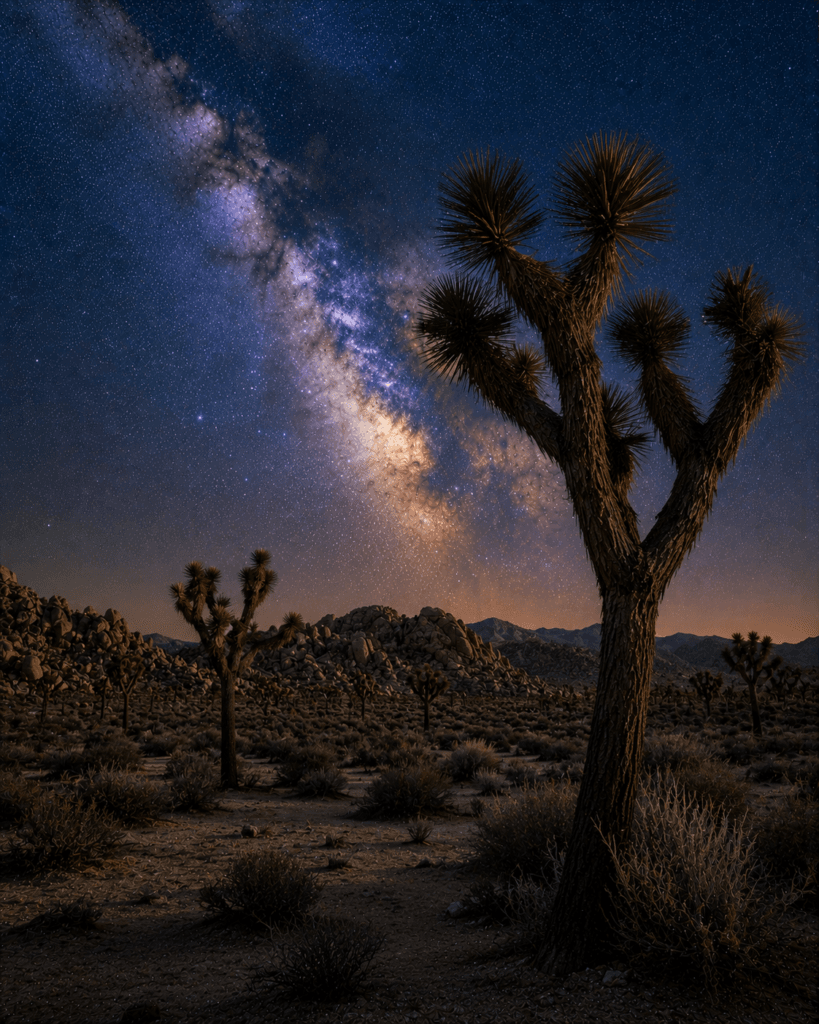
Joshua Tree National Park is one of the most famous stargazing destinations in the United States. Located in Southern California where the Mojave and Colorado deserts meet, the park is known for its unique Joshua trees, massive granite formations, and exceptionally dark skies.
Despite being within driving distance of Los Angeles, San Diego, and Palm Springs, large portions of the park remain remarkably free from light pollution. Visitors can enjoy spectacular views of the Milky Way, meteor showers, planets, and thousands of stars throughout the year.
For astronomy enthusiasts, astrophotographers, and travelers seeking unforgettable night skies, Joshua Tree remains one of the premier dark sky destinations in North America.
Why Joshua Tree National Park Is Great for Stargazing
Joshua Tree offers a unique combination of accessibility and outstanding astronomy conditions.
- International Dark Sky Park designation
- Low desert humidity
- Excellent Milky Way visibility
- Minimal light pollution in central park areas
- Unique Joshua tree foregrounds
- Year-round astronomy opportunities
The park’s desert environment provides clear skies during much of the year, making it one of California’s most reliable stargazing destinations.
Travelers looking for additional astronomy destinations can explore other Dark Sky Parks throughout the United States.
Best Time to Visit Joshua Tree for Stargazing
Spring
Spring offers comfortable nighttime temperatures and excellent Milky Way viewing conditions. This is one of the most popular seasons for astronomy visitors.
Summer
Summer provides peak Milky Way visibility. Although daytime temperatures can be extremely hot, nighttime skies are often spectacular.
Travelers planning a California astronomy trip should review our Best Time to See the Milky Way in California guide.
Fall
Fall brings cooler weather, fewer visitors, and excellent atmospheric conditions for astrophotography.
Winter
Winter offers long nights and some of the clearest skies of the year, making it ideal for observing constellations and deep-sky objects.
Best Stargazing Locations in Joshua Tree National Park
Hidden Valley
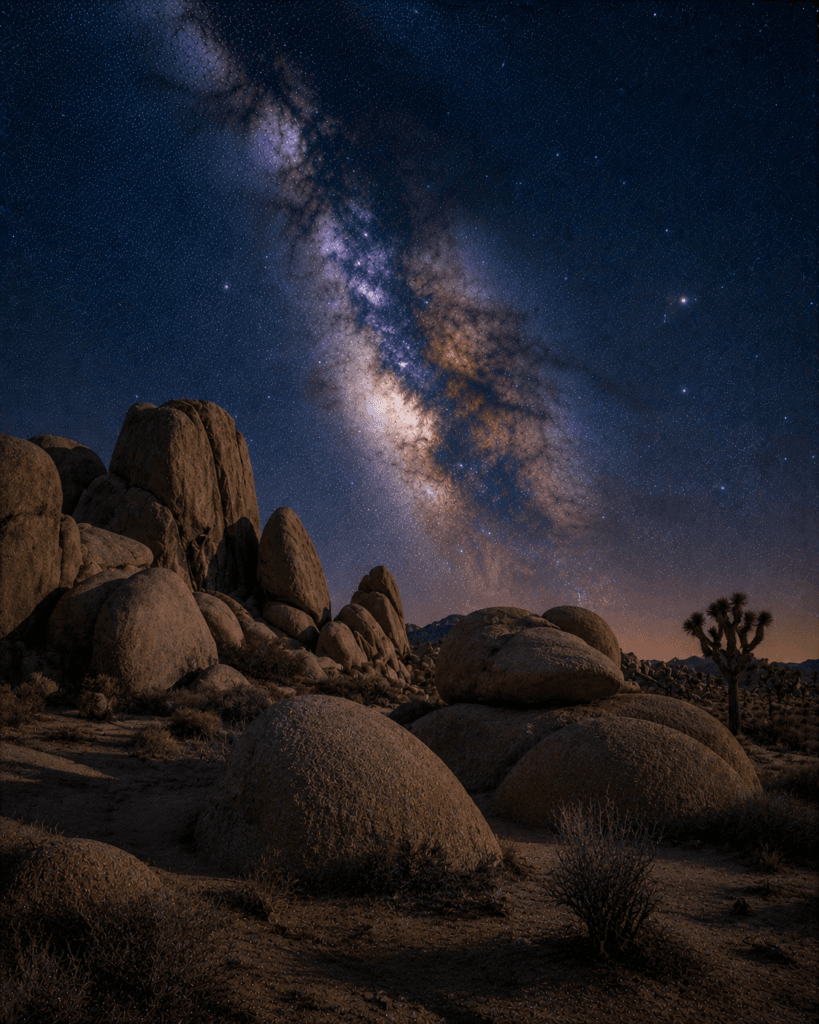
Hidden Valley is one of the park’s most iconic locations and provides dramatic rock formations beneath the stars.
Keys View
Keys View offers panoramic desert views and exceptional opportunities for night photography.
Jumbo Rocks
The Jumbo Rocks area is a favorite among astrophotographers thanks to its unique granite formations.
Cap Rock
Cap Rock provides easy access and excellent foreground opportunities for Milky Way photography.
Milky Way Viewing at Joshua Tree
Joshua Tree National Park is one of California’s best Milky Way destinations. The viewing season generally runs from March through October, with peak visibility occurring between May and August.
Moonless nights reveal the galactic core stretching above the desert landscape, creating unforgettable views for both casual observers and photographers.
For annual planning, review our Milky Way Viewing Calendar USA.
Astrophotography Opportunities
Joshua Tree is one of the most photographed dark sky locations in America.
- Milky Way above Joshua trees
- Star trails over granite formations
- Desert night landscapes
- Meteor shower photography
- Wide-angle Milky Way panoramas
The park’s distinctive desert scenery creates instantly recognizable astrophotography compositions.
Additional photography techniques can be found in our Astrophotography category.
Meteor Shower Viewing
Joshua Tree provides excellent conditions for observing annual meteor showers.
- Perseids
- Geminids
- Orionids
- Leonids
Wide-open desert horizons allow visitors to observe meteors across large sections of the sky.
Annual forecasts and peak dates are available in our Meteor Showers section.
Stargazing Tips
- Bring extra water
- Use red-light flashlights
- Check moon phases before visiting
- Arrive before sunset
- Carry extra camera batteries
- Allow time for dark adaptation
Desert temperatures can change dramatically after sunset, so proper preparation is recommended.
Is Joshua Tree National Park Worth Visiting?
Absolutely. Joshua Tree National Park combines world-class dark skies, iconic desert scenery, and outstanding Milky Way visibility, making it one of the most rewarding astronomy destinations in North America.
Visitors comparing western astronomy destinations may also wish to review our Death Valley National Park Stargazing Guide.
Frequently Asked Questions
Is Joshua Tree National Park an International Dark Sky Park?
Yes. Joshua Tree National Park is officially designated as an International Dark Sky Park.
When is the best time to see the Milky Way?
The best viewing period generally runs from May through August.
Do I need a telescope?
No. The Milky Way and thousands of stars are visible with the naked eye under dark conditions.
What is the best stargazing location in Joshua Tree?
Hidden Valley, Keys View, Jumbo Rocks, and Cap Rock are among the park’s most popular astronomy locations.
Plan your trip within five nights of the new moon and choose Bortle 1–3 locations for the best Milky Way visibility.