Death Valley National Park Stargazing Guide
Death Valley National Park is one of the most famous dark sky destinations in the United States. Spanning California and […]
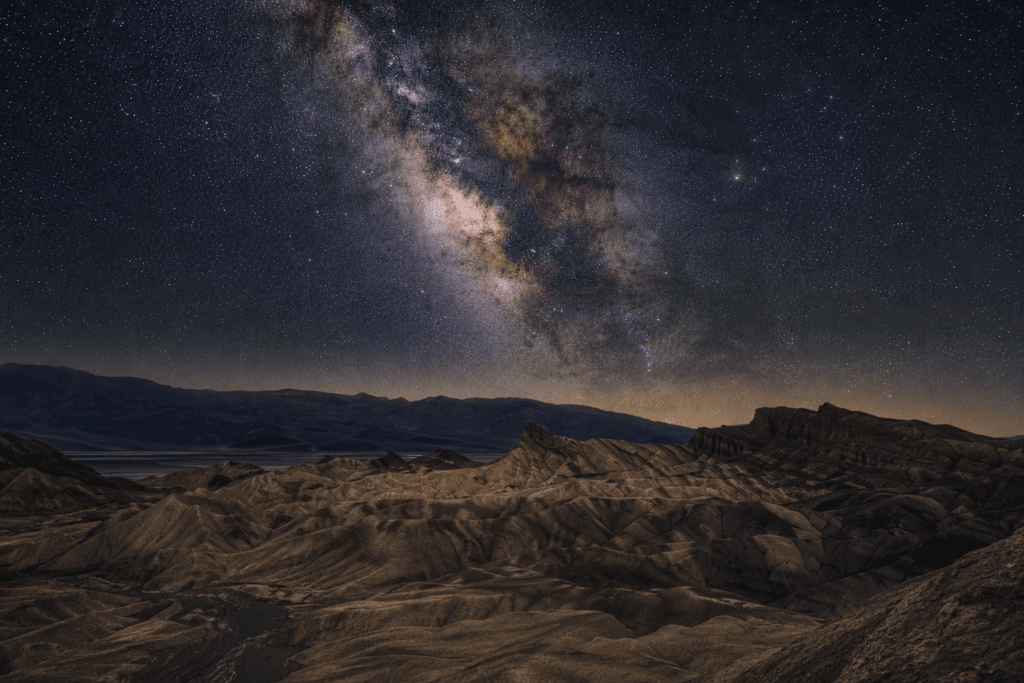
Death Valley National Park is one of the most famous dark sky destinations in the United States. Spanning California and Nevada, this vast desert landscape offers exceptionally low light pollution, dramatic scenery, and some of the clearest night skies in North America.
Recognized as an International Dark Sky Park, Death Valley attracts astronomers, astrophotographers, and travelers looking for unforgettable Milky Way experiences. Its remote location, dry climate, and expansive horizons make it one of the best places in the country to explore the night sky.
Why Death Valley Is Perfect for Stargazing
Death Valley’s reputation as a premier astronomy destination comes from its unique combination of geography and climate.
- International Dark Sky Park designation
- Extremely low light pollution
- Dry desert air
- Wide-open horizons
- High number of clear nights annually
- Remote wilderness environment
These factors create ideal conditions for observing stars, planets, meteor showers, and the Milky Way. Travelers interested in similar destinations should also explore other Dark Sky Parks across the western United States.
Best Time to Visit Death Valley for Stargazing
Spring
Spring offers pleasant nighttime temperatures and increasing Milky Way visibility. It is one of the most popular seasons for astronomy visitors.
Summer
Summer delivers outstanding Milky Way viewing opportunities, although daytime temperatures can be extremely hot. Nighttime conditions remain excellent for astronomy.
Visitors planning a California astronomy trip should review our Best Time to See the Milky Way in California guide.
Fall
Fall combines comfortable temperatures with dark skies and reduced crowds. Many astrophotographers consider autumn an ideal season for night photography.
Winter
Winter nights are long and exceptionally dark. Although the Milky Way core is less prominent, many constellations and deep-sky objects become excellent viewing targets.
Best Stargazing Locations in Death Valley National Park
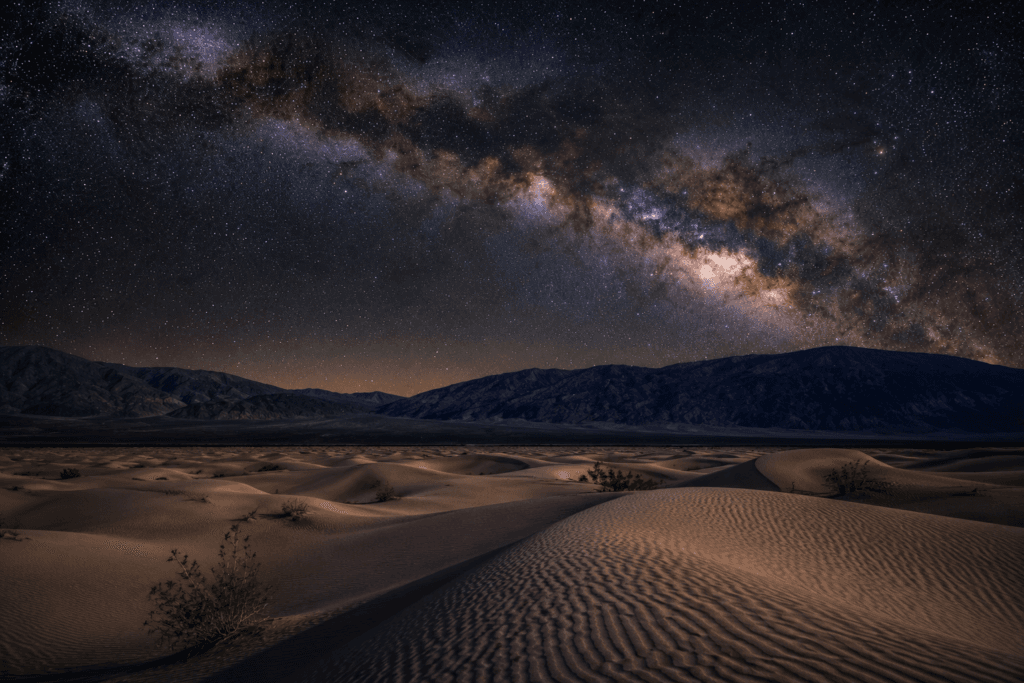
Mesquite Flat Sand Dunes
The dunes provide one of the most iconic night photography locations in the park. The combination of desert textures and star-filled skies creates spectacular compositions.
Badwater Basin
Badwater Basin offers wide-open horizons and unique foreground opportunities for astrophotography.
Zabriskie Point
Zabriskie Point is one of the most popular overlooks in Death Valley and provides dramatic nighttime landscapes.
Dante’s View
At over 5,000 feet in elevation, Dante’s View offers panoramic views across the valley and exceptional stargazing opportunities.
Milky Way Viewing at Death Valley
Death Valley is one of California’s best locations for observing the Milky Way. The viewing season generally runs from March through October, with peak conditions occurring between June and August.
The park’s dark skies allow the galactic core to appear exceptionally bright and detailed during moonless nights.
For annual planning, review our Milky Way Viewing Calendar USA.
Astrophotography Opportunities
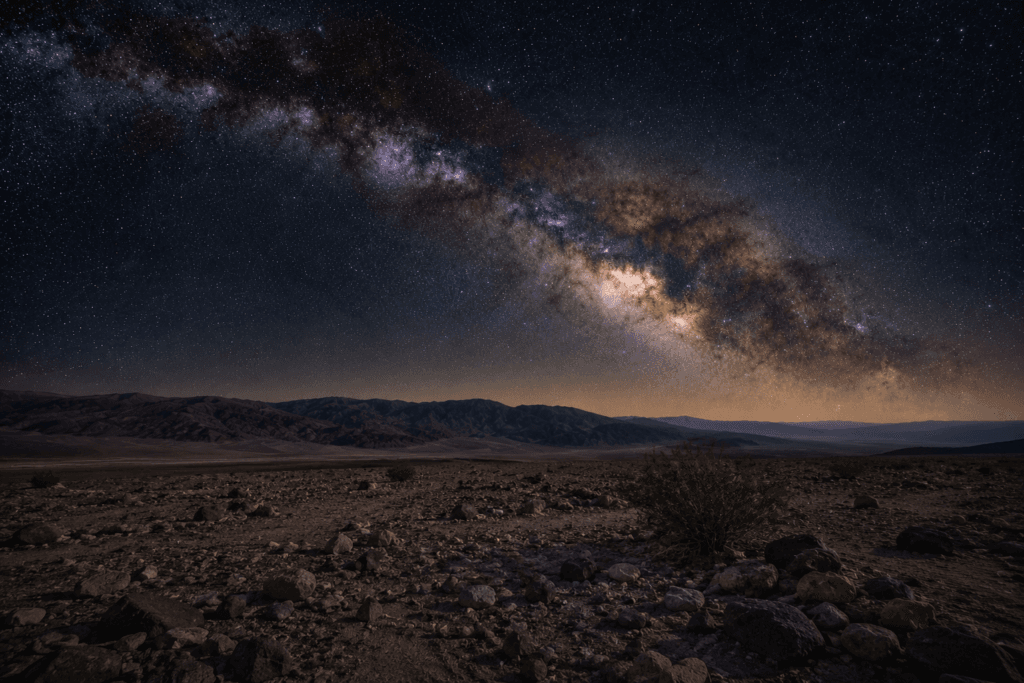
Death Valley is considered one of the world’s premier astrophotography destinations.
- Milky Way over sand dunes
- Star trails above desert landscapes
- Night photography at Badwater Basin
- Planetary alignments
- Meteor shower photography
The park’s unique terrain creates endless creative possibilities for photographers.
Photography techniques and equipment recommendations are available in our Astrophotography category.
Meteor Shower Viewing
Death Valley’s dark skies make it an excellent location for observing annual meteor showers.
- Perseids
- Geminids
- Orionids
- Leonids
Dark horizons and minimal artificial light significantly improve meteor visibility.
Peak dates and forecasts are available in our Meteor Showers section.
Stargazing Tips
- Bring plenty of water
- Use red-light flashlights
- Check moon phases before visiting
- Arrive before sunset
- Carry extra camera batteries
- Allow time for dark adaptation
Preparation is important due to the park’s remote desert environment.
Is Death Valley National Park Worth Visiting?
Absolutely. Death Valley National Park combines world-class dark skies with some of the most unique desert scenery on Earth. Its exceptional astronomy conditions make it one of the finest stargazing destinations in North America.
Visitors exploring multiple western astronomy destinations may also wish to compare viewing conditions with our Best Time to See the Milky Way in Nevada guide.
Frequently Asked Questions
Is Death Valley an International Dark Sky Park?
Yes. Death Valley National Park is officially designated as an International Dark Sky Park.
When is the best time to see the Milky Way?
The best viewing period generally runs from June through August.
Do I need a telescope?
No. Many stars, planets, and the Milky Way are easily visible with the naked eye.
Which location is best for stargazing?
Mesquite Flat Sand Dunes, Badwater Basin, Zabriskie Point, and Dante’s View are among the best locations.
Plan your trip within five nights of the new moon and choose Bortle 1–3 locations for the best Milky Way visibility.