Grand Canyon National Park Stargazing Guide
Grand Canyon National Park is one of the most iconic stargazing destinations in the United States. Known worldwide for its […]
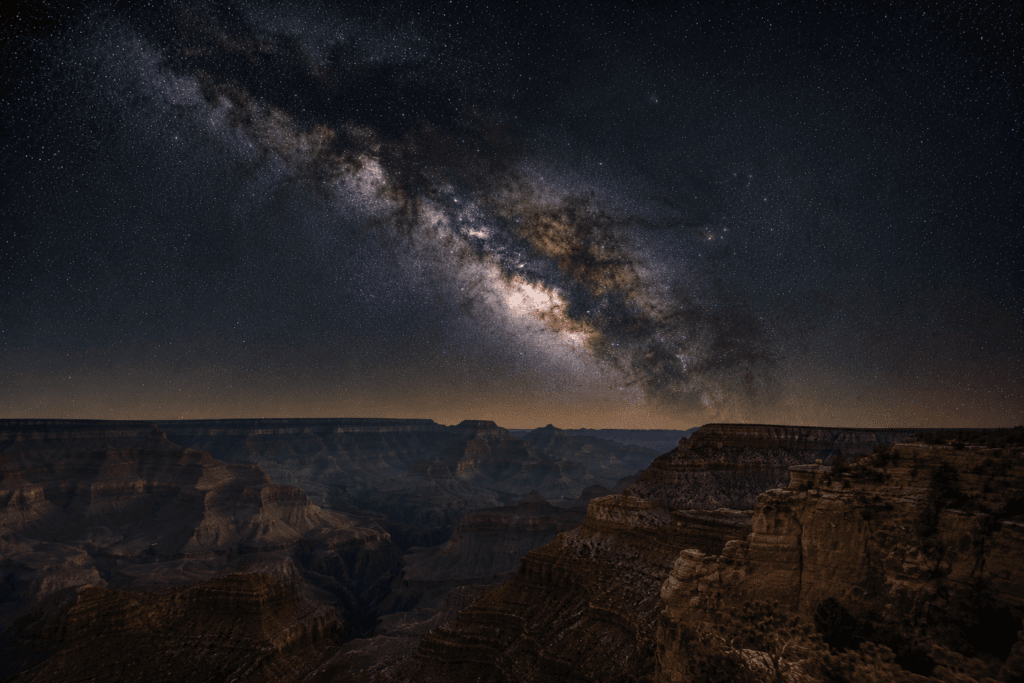
Grand Canyon National Park is one of the most iconic stargazing destinations in the United States. Known worldwide for its immense geological beauty, the park is equally impressive after sunset when dark skies reveal thousands of stars, bright planets, and the Milky Way stretching across the horizon.
Designated as an International Dark Sky Park, Grand Canyon offers exceptional night sky viewing thanks to its remote location, high elevation, and ongoing efforts to reduce light pollution. Visitors can experience some of the darkest skies in Arizona while enjoying one of the world’s most famous landscapes.
Whether you’re an amateur astronomer, astrophotographer, or casual traveler, Grand Canyon National Park delivers unforgettable astronomy experiences throughout the year.
Why Grand Canyon Is One of America’s Top Stargazing Destinations
Several factors contribute to the park’s outstanding night sky conditions.
- International Dark Sky Park designation
- High elevation viewpoints
- Low regional light pollution
- Dry desert climate
- Wide canyon horizons
- Excellent Milky Way visibility
The vast canyon landscape provides unobstructed views of the night sky, making Grand Canyon one of the most recognizable astronomy destinations in North America.
Visitors interested in similar destinations can explore other Dark Sky Parks throughout the western United States.
Best Time to Visit Grand Canyon for Stargazing
Spring
Spring offers comfortable temperatures and increasing Milky Way visibility. Visitor numbers are generally lower than during summer.
Summer
Summer is the peak season for Milky Way viewing. The galactic core becomes highly visible and remains above the horizon for much of the night.
Travelers planning an Arizona astronomy trip should also review our Best Time to See the Milky Way in Arizona guide.
Fall
Fall combines cooler weather with stable atmospheric conditions, creating excellent opportunities for astronomy and night photography.
Winter
Winter skies are exceptionally clear, and long nights provide extended viewing opportunities for constellations and deep-sky objects.
Best Stargazing Locations in Grand Canyon National Park
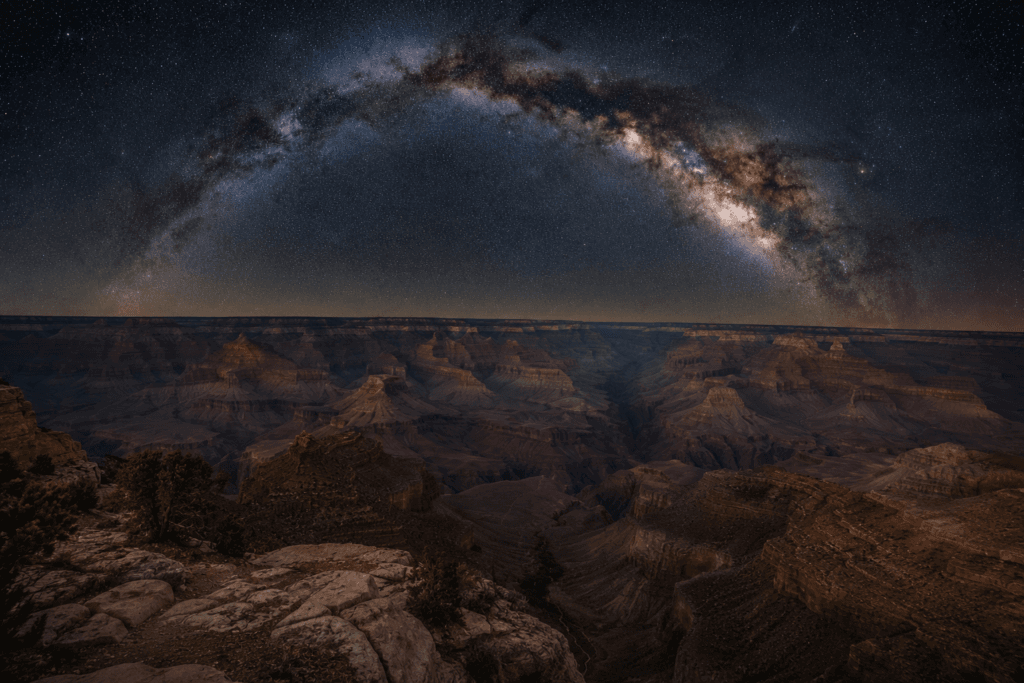
Mather Point
Mather Point is one of the most accessible and popular stargazing locations in the park. Its expansive canyon views provide excellent night sky visibility.
Desert View Watchtower
The eastern section of the park often experiences lower visitor numbers and offers outstanding dark sky conditions.
Yavapai Point
Yavapai Point provides elevated canyon views and excellent opportunities for astrophotography.
Lipan Point
Lipan Point is widely regarded as one of the best locations for observing the Milky Way above the canyon landscape.
Milky Way Viewing at Grand Canyon
The Milky Way season generally runs from March through October, with peak visibility occurring during June, July, and August.
On moonless nights, visitors can observe the galactic core rising above the canyon and stretching across the sky in remarkable detail.
For annual planning and seasonal visibility, review our Milky Way Viewing Calendar USA.
Astrophotography Opportunities
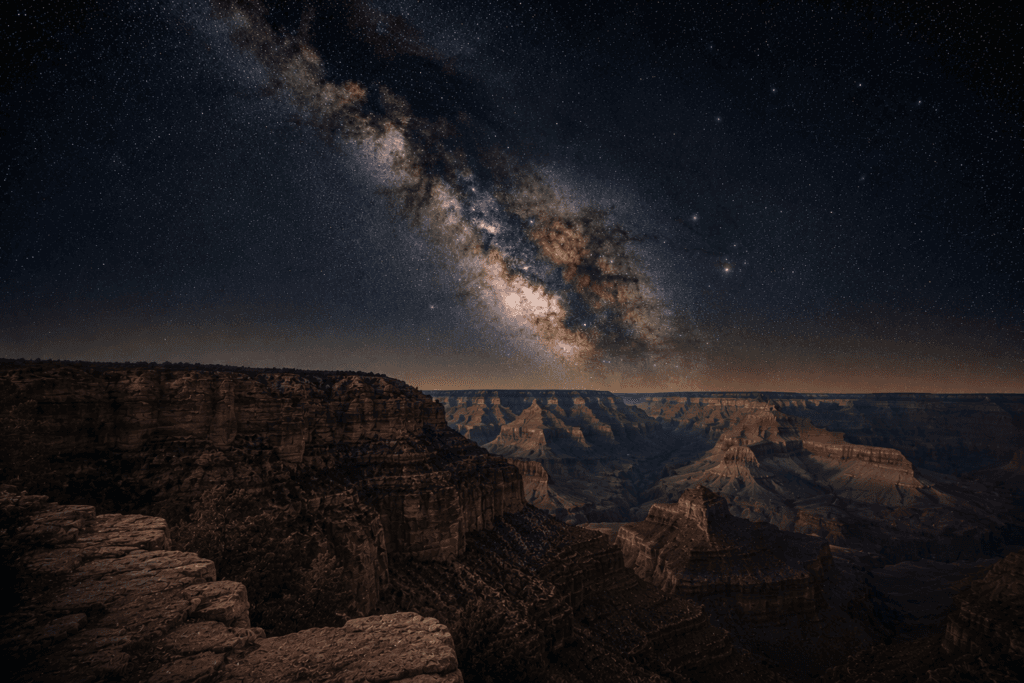
Grand Canyon National Park is one of the most rewarding astrophotography destinations in North America.
- Milky Way above canyon cliffs
- Star trails over rock formations
- Night landscapes from canyon overlooks
- Meteor shower photography
- Planetary conjunctions
The combination of dramatic geology and dark skies creates endless photographic opportunities.
Photography techniques and equipment recommendations can be found in our Astrophotography category.
Meteor Shower Viewing
Grand Canyon provides excellent visibility for major annual meteor showers thanks to its dark skies and expansive viewing horizons.
- Perseids
- Geminids
- Orionids
- Leonids
Dark conditions allow visitors to observe significantly more meteors than would be visible in urban environments.
Forecasts and annual peak dates are available in our Meteor Showers section.
Stargazing Tips
- Dress for cooler nighttime temperatures
- Use red-light flashlights
- Check moon phases before visiting
- Arrive before sunset
- Carry extra camera batteries
- Allow time for dark adaptation
Weather conditions can change quickly, particularly at higher elevations along the canyon rim.
Is Grand Canyon National Park Worth Visiting?
Absolutely. Grand Canyon National Park combines one of the world’s most famous landscapes with some of Arizona’s best dark sky conditions. It remains a must-visit destination for stargazers, photographers, and astronomy enthusiasts.
Visitors planning a larger Southwest astronomy adventure may also enjoy comparing conditions with our Best Time to See the Milky Way in Utah guide.
Frequently Asked Questions
Is Grand Canyon an International Dark Sky Park?
Yes. Grand Canyon National Park is officially designated as an International Dark Sky Park.
When is the best time to see the Milky Way?
The best viewing period generally runs from June through August.
Do I need a telescope?
No. Many stars, planets, and the Milky Way are visible with the naked eye.
Which location is best for stargazing?
Mather Point, Lipan Point, Yavapai Point, and Desert View Watchtower are among the park’s top stargazing locations.
Plan your trip within five nights of the new moon and choose Bortle 1–3 locations for the best Milky Way visibility.