Best Time to See the Milky Way in Wyoming
Wyoming is one of the premier stargazing destinations in the United States. Home to Yellowstone National Park, Grand Teton National […]
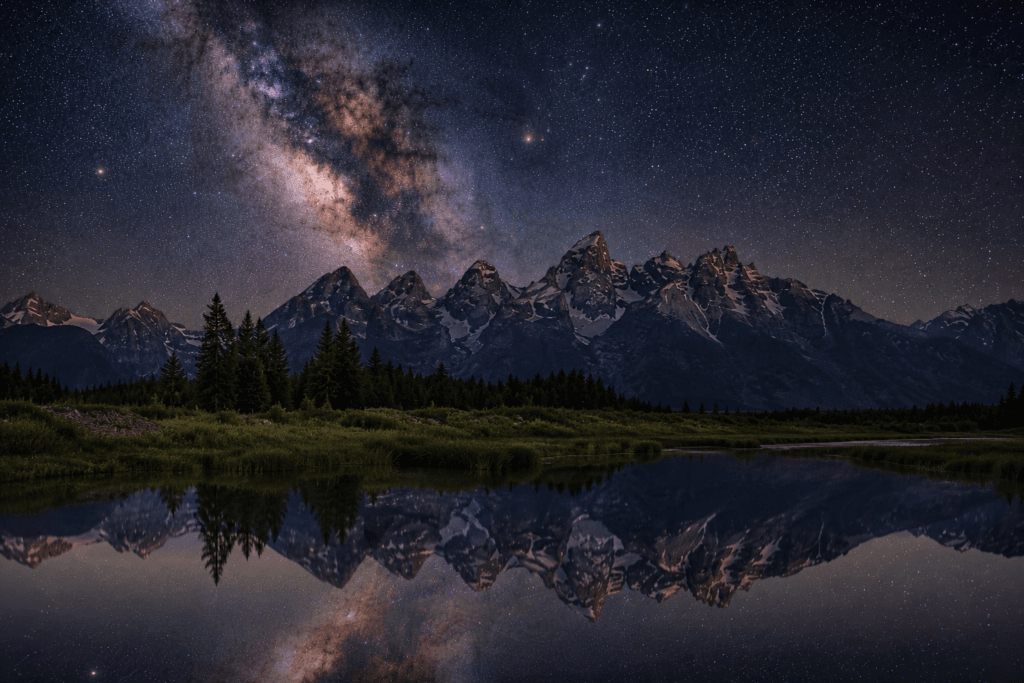
Wyoming is one of the premier stargazing destinations in the United States. Home to Yellowstone National Park, Grand Teton National Park, vast wilderness areas, and enormous stretches of undeveloped land, Wyoming offers some of the darkest skies in the American West. For Milky Way enthusiasts, the state combines dramatic mountain scenery with exceptional night sky conditions.
The best time to see the Milky Way in Wyoming is generally from May through September, with peak visibility occurring during June, July, and August. During these months, the galactic core rises high above the horizon and remains visible for long periods during the night.
For a nationwide overview, visit our Milky Way Viewing Calendar USA.
When Is the Best Time to See the Milky Way in Wyoming?
The Milky Way core becomes visible in Wyoming during spring and remains visible into early autumn.
- March–April: Early morning Milky Way visibility begins.
- May–June: Prime viewing season develops.
- July–August: Peak Milky Way season.
- September: Excellent visibility with cooler temperatures.
Most astrophotographers consider July the strongest overall month due to long visibility windows and favorable weather.
Monthly Milky Way Visibility in Wyoming
March and April
The galactic core begins appearing before sunrise. Although viewing windows remain relatively short, clear nights can provide excellent early-season opportunities.
May and June
Visibility improves dramatically as the Milky Way rises earlier and remains visible longer each night.
July and August
Peak season arrives. The galactic core dominates the night sky and remains visible for much of the night.
September
Cool temperatures, stable weather patterns, and reduced summer crowds often create ideal stargazing conditions.
Why Wyoming Is One of America’s Best Stargazing States
- Extremely low population density
- Large protected wilderness areas
- Minimal artificial light pollution
- High elevation viewing locations
- National parks with dark sky conditions
These factors combine to create some of the best night sky viewing opportunities in North America.
Best Places to See the Milky Way in Wyoming
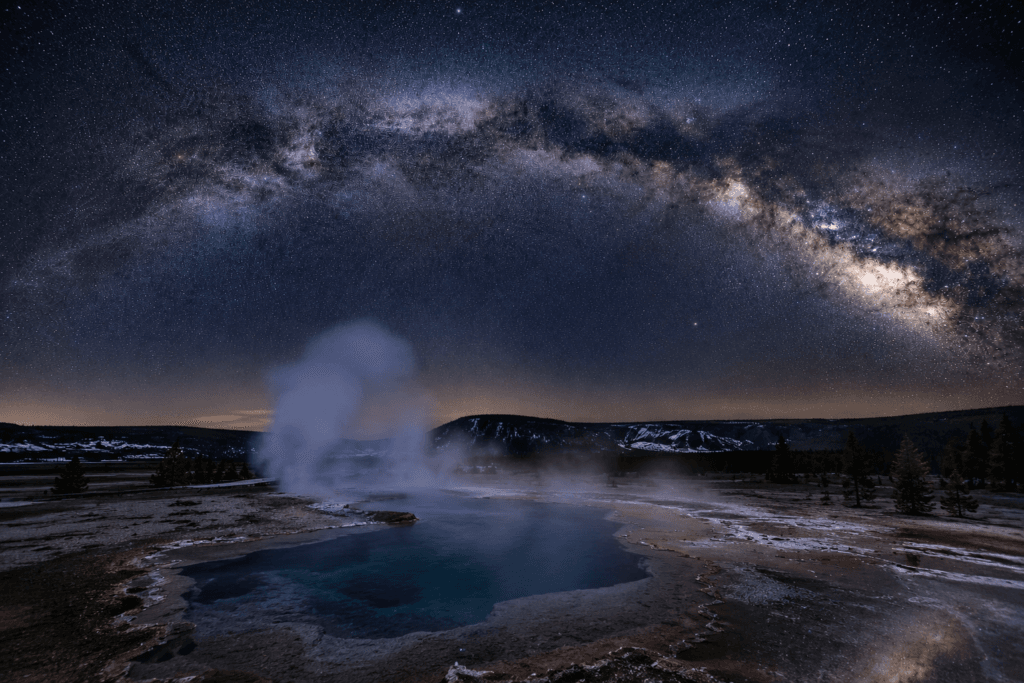
Grand Teton National Park
Grand Teton National Park is one of the most iconic Milky Way photography destinations in America. The dramatic mountain skyline creates unforgettable foreground compositions.
Yellowstone National Park
Yellowstone offers dark skies, geothermal features, and vast wilderness landscapes that make it a favorite among stargazers.
Bighorn National Forest
This remote mountain region provides excellent dark sky opportunities far from major population centers.
Wind River Range
The Wind River Range contains some of Wyoming’s most spectacular wilderness landscapes and exceptionally dark skies.
Devils Tower National Monument
The famous rock formation creates one of the most recognizable night photography foregrounds in the United States.
Several of these destinations are also featured in our Stargazing Locations and Dark Sky Parks guides.
Moon Phases and Dark Sky Planning
Even Wyoming’s darkest skies can be affected by moonlight.
- Plan around the new moon.
- Avoid full moon periods.
- Check moonrise and moonset times before traveling.
The darkest nights reveal significantly more detail within the Milky Way.
Best Time for Milky Way Photography in Wyoming
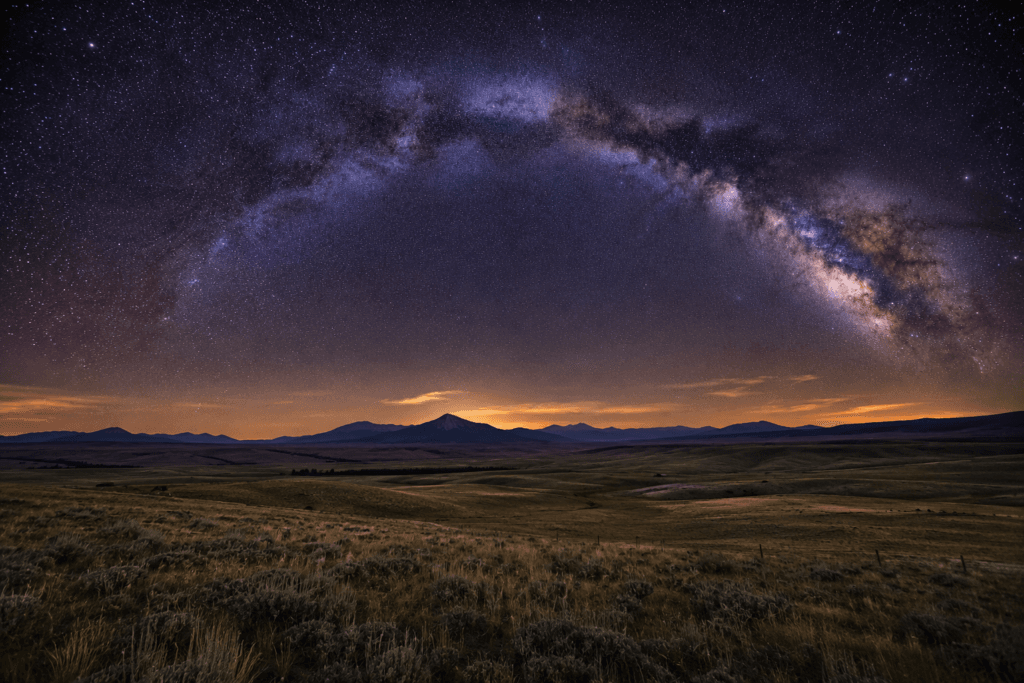
Wyoming offers some of the most dramatic astrophotography opportunities in North America.
- Mountain reflections
- Geothermal landscapes
- Prairie horizons
- Rock formations
- Wilderness valleys
July and August generally provide the longest photography windows and the most favorable conditions.
Weather Considerations
- Mountain weather changes rapidly.
- Summer offers the most reliable viewing conditions.
- Temperatures can drop sharply after sunset.
- Afternoon storms are common in some regions.
Always review local forecasts before heading into remote areas.
Final Thoughts
Wyoming is one of the best places in America to experience the Milky Way. The combination of national parks, dark skies, mountain landscapes, and remote wilderness creates extraordinary opportunities for stargazing and astrophotography.
For the best results, plan your trip between June and August and schedule your visit around a new moon.
Frequently Asked Questions
What is the best month to see the Milky Way in Wyoming?
July is generally considered the strongest month because the galactic core remains visible for much of the night.
Can you see the Milky Way in Yellowstone National Park?
Yes. Yellowstone is one of the best national parks in the United States for Milky Way viewing.
Can you see the Milky Way in Grand Teton National Park?
Absolutely. Grand Teton is one of the most photographed Milky Way locations in North America.
Do I need a telescope to see the Milky Way?
No. The Milky Way is visible to the naked eye from dark locations.
What moon phase is best for Milky Way viewing?
A new moon generally provides the darkest skies and the best viewing conditions.
Plan your trip within five nights of the new moon and choose Bortle 1–3 locations for the best Milky Way visibility.