Best Time to See the Milky Way in Idaho
Idaho is one of the most underrated stargazing destinations in the United States. With vast wilderness areas, rugged mountain ranges, […]
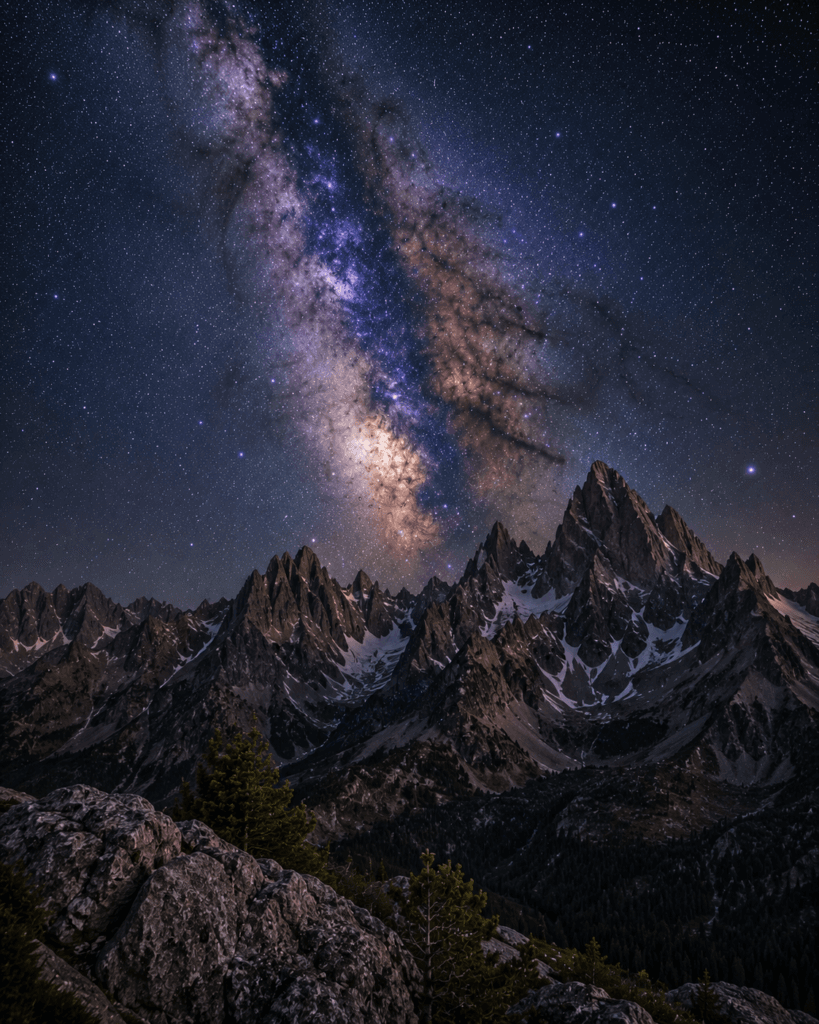
Idaho is one of the most underrated stargazing destinations in the United States. With vast wilderness areas, rugged mountain ranges, remote high desert landscapes, and some of the darkest skies in the West, Idaho offers excellent opportunities to experience the Milky Way. While neighboring states like Utah and Colorado often receive more attention, Idaho quietly provides many of the same advantages with fewer crowds.
When Is the Best Time to See the Milky Way in Idaho?
The best time to see the Milky Way in Idaho is generally between May and September, with peak viewing conditions occurring during June, July, and August. During these months, the galactic core remains visible for long periods and rises high above the horizon.
- March–April: Early morning visibility begins.
- May–June: Prime viewing season develops.
- July–August: Peak Milky Way season.
- September: Excellent visibility with cooler temperatures.
For nationwide planning, see our Milky Way Viewing Calendar USA.
Monthly Milky Way Visibility in Idaho
March and April
The galactic core begins appearing before dawn. Viewing opportunities remain limited but can still produce rewarding experiences under dark skies.
May and June
Milky Way visibility improves significantly as the core rises earlier and remains visible for longer periods.
July and August
These are generally the best months for Milky Way viewing in Idaho. The galactic core becomes highly visible and remains above the horizon for much of the night.
September
Cooler temperatures and stable weather patterns often create excellent viewing conditions.
Why Idaho Is an Excellent Stargazing Destination
- Large areas of protected wilderness
- Low population density
- Minimal light pollution outside cities
- High mountain viewpoints
- Remote desert and forest landscapes
These conditions allow Idaho to offer exceptionally dark skies compared to many more populated states.
Best Places to See the Milky Way in Idaho
Central Idaho Dark Sky Reserve
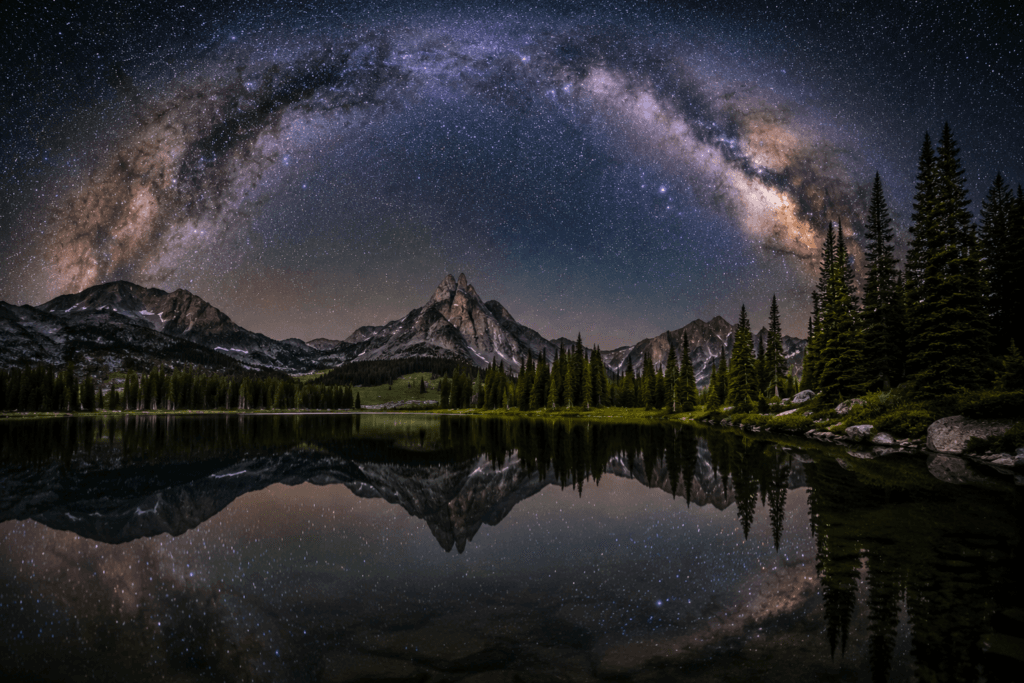
One of the premier dark sky destinations in the United States, offering exceptional Milky Way visibility and internationally recognized night sky protection.
Sawtooth National Recreation Area
The Sawtooth Mountains provide dramatic alpine scenery combined with excellent dark sky conditions.
Craters of the Moon National Monument
Volcanic landscapes and minimal light pollution make this one of Idaho’s most unique stargazing destinations.
Bruneau Dunes State Park
Home to an observatory and dark skies, Bruneau Dunes is one of Idaho’s most accessible astronomy destinations.
Salmon-Challis National Forest
Vast wilderness areas provide excellent opportunities for remote night sky observation.
Several of these locations also appear in our Stargazing Locations and Dark Sky Parks guides.
Moon Phases and Dark Sky Planning
The moon can dramatically affect Milky Way visibility.
- Plan around a new moon.
- Avoid full moon periods.
- Check moonrise and moonset times before traveling.
The darkest nights reveal significantly more detail within the Milky Way.
Best Time for Milky Way Photography in Idaho
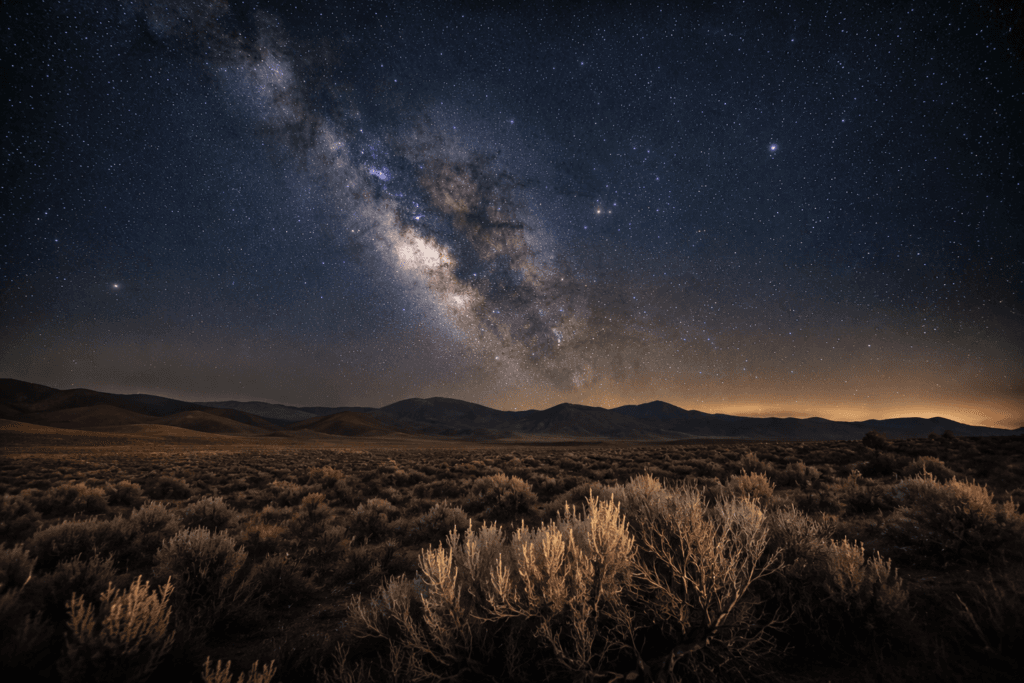
Idaho offers a wide range of astrophotography opportunities.
- Alpine lakes
- Mountain peaks
- Volcanic landscapes
- Dark forests
- High desert terrain
July and August generally provide the longest and most reliable photography windows.
Weather Considerations
- Spring weather can be unpredictable.
- Summer offers the most reliable viewing conditions.
- Mountain temperatures can drop rapidly after sunset.
- Wildfire smoke occasionally affects visibility.
Always check local weather forecasts before traveling.
Final Thoughts
Idaho remains one of the hidden gems of American stargazing. The combination of wilderness, dark skies, and diverse landscapes creates exceptional opportunities for both casual observers and dedicated astrophotographers.
For the best experience, plan your trip between June and August and schedule your visit around a new moon.
Frequently Asked Questions
What is the best month to see the Milky Way in Idaho?
July is generally considered the strongest month because the galactic core remains visible for much of the night.
What is the darkest place in Idaho?
The Central Idaho Dark Sky Reserve is widely considered the premier dark sky destination in the state.
Can you see the Milky Way at Craters of the Moon?
Yes. Craters of the Moon National Monument offers excellent dark sky conditions and unique volcanic landscapes.
Do I need a telescope to see the Milky Way?
No. The Milky Way is visible to the naked eye from dark locations.
What moon phase is best for Milky Way viewing?
A new moon generally provides the darkest skies and best viewing conditions.
Plan your trip within five nights of the new moon and choose Bortle 1–3 locations for the best Milky Way visibility.