Hovenweep National Monument Stargazing Guide
Hovenweep National Monument is one of the most underrated dark sky destinations in the American Southwest. Located along the Utah-Colorado […]
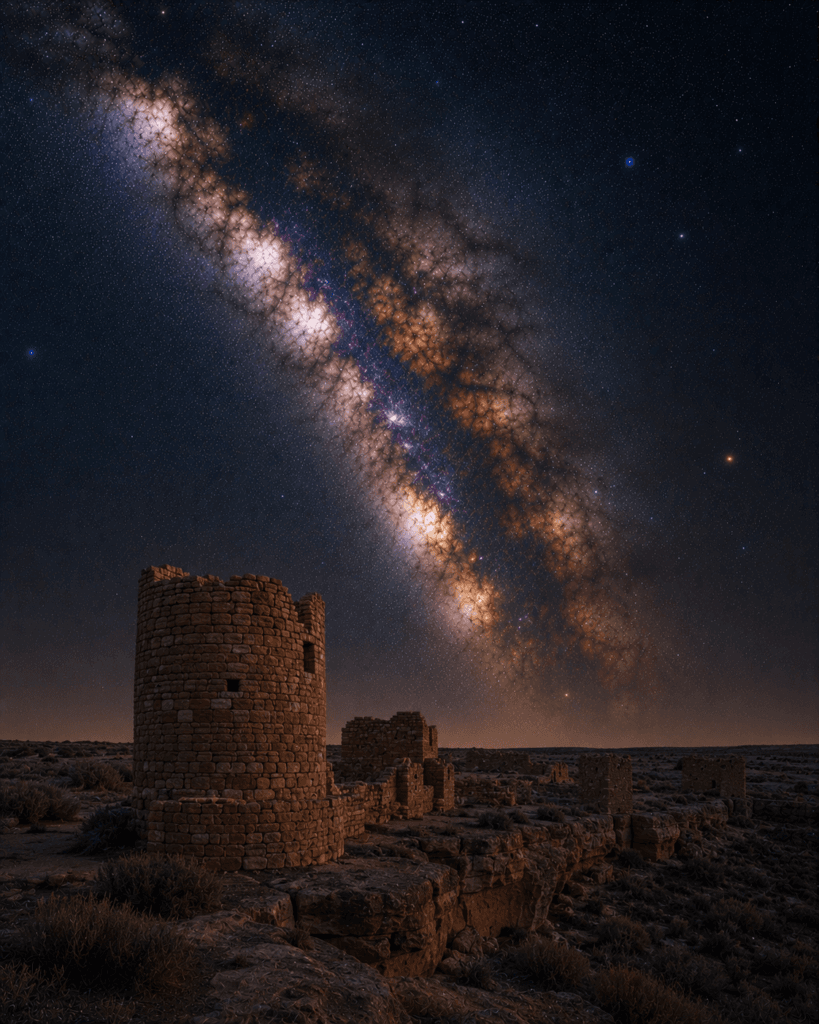
Hovenweep National Monument is one of the most underrated dark sky destinations in the American Southwest. Located along the Utah-Colorado border, the monument protects a remarkable collection of ancestral Puebloan towers, villages, and archaeological sites surrounded by remote desert landscapes.
Far from major cities and artificial light sources, Hovenweep offers exceptionally dark skies that attract stargazers, astrophotographers, and travelers seeking a quieter alternative to larger national parks. The combination of ancient stone structures and brilliant night skies creates an atmosphere unlike anywhere else in North America.
For visitors interested in astronomy, history, and photography, Hovenweep delivers a truly unique experience beneath the stars.
Why Hovenweep National Monument Is Great for Stargazing
Hovenweep benefits from some of the darkest skies in the Four Corners region.
- International Dark Sky Park designation
- Extremely low light pollution
- Remote desert location
- Excellent Milky Way visibility
- Ancient stone tower foregrounds
- Wide-open horizons
The monument’s isolation allows visitors to experience natural darkness rarely found in modern America.
Travelers looking for additional astronomy destinations can explore other Dark Sky Parks throughout the United States.
Best Time to Visit Hovenweep for Stargazing
Spring
Spring offers comfortable temperatures and excellent conditions for Milky Way viewing and astrophotography.
Summer
Summer is peak Milky Way season. The galactic core becomes highly visible above the ancient ruins and desert landscape.
Travelers planning a Four Corners astronomy trip should review our Milky Way Viewing Calendar USA guide.
Fall
Fall provides crisp desert air, fewer visitors, and outstanding night sky visibility.
Winter
Winter offers exceptionally dark skies and long nights that are ideal for observing constellations and deep-sky objects.
Best Stargazing Locations in Hovenweep National Monument
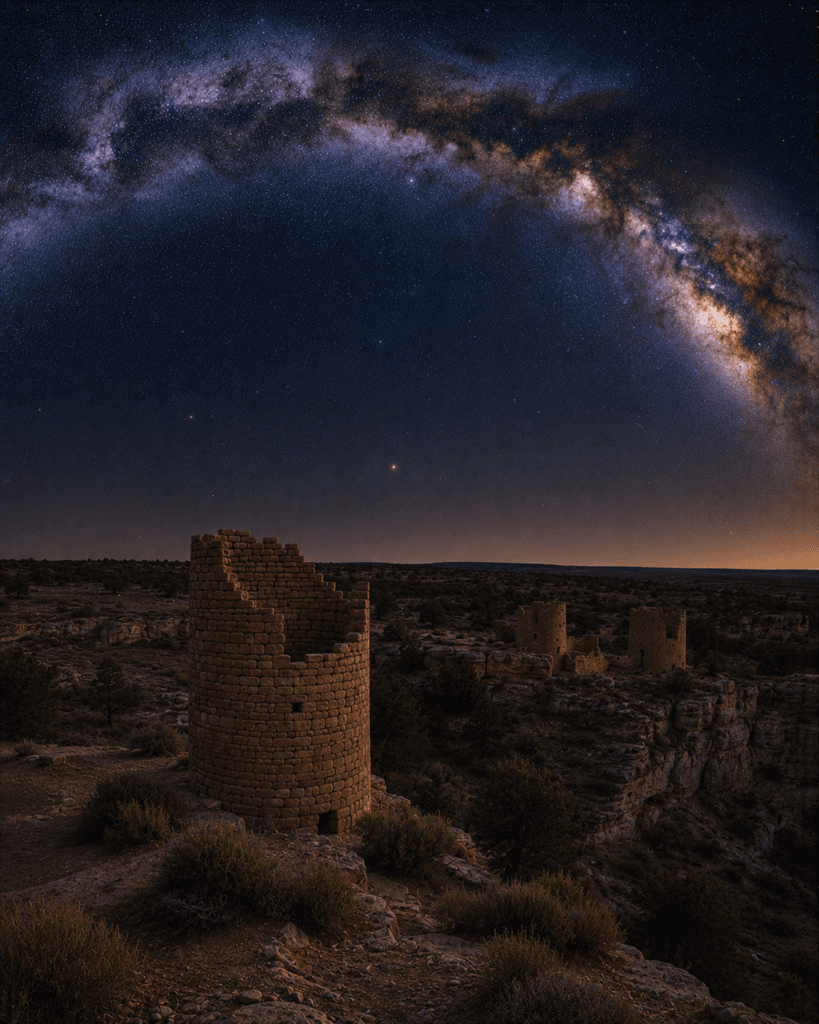
Hovenweep Castle Area
The iconic Hovenweep Castle provides one of the most unique astronomy foregrounds in the Southwest.
Square Tower Group
This area contains some of the monument’s most famous archaeological structures and excellent Milky Way photography opportunities.
Rim Trail Overlooks
Several overlooks along the Rim Trail offer expansive views of the surrounding desert beneath dark skies.
Visitor Center Vicinity
The area surrounding the visitor center provides easy access for casual stargazers and photographers.
Milky Way Viewing at Hovenweep
Hovenweep National Monument is one of the best places in the Four Corners region to observe the Milky Way. The viewing season generally runs from March through October, with peak visibility occurring between May and August.
Moonless nights reveal the galactic core rising above ancient stone towers and the surrounding canyon landscape.
For annual planning, review our Milky Way Viewing Calendar USA.
Astrophotography Opportunities
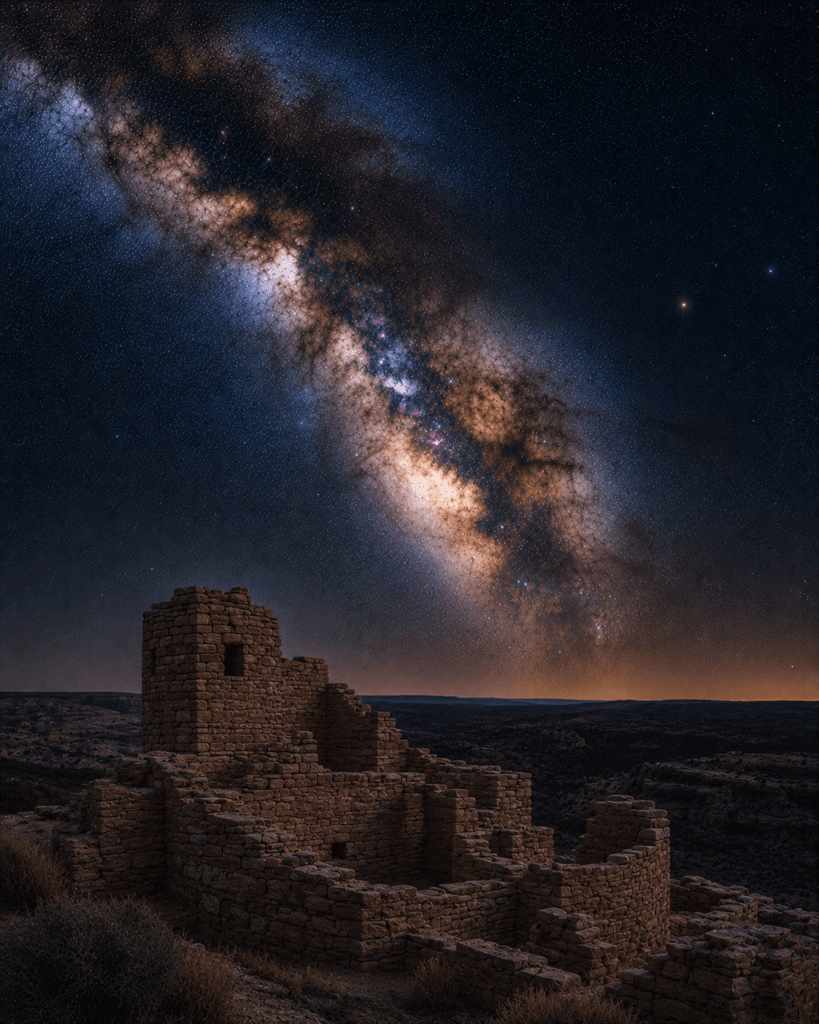
Hovenweep offers some of the most distinctive astrophotography opportunities in North America.
- Milky Way above ancient stone towers
- Star trails over archaeological sites
- Desert night landscapes
- Meteor shower photography
- Historic ruins beneath dark skies
The combination of cultural history and pristine night skies creates extraordinary photography opportunities.
Additional photography techniques can be found in our Astrophotography category.
Meteor Shower Viewing
Hovenweep provides excellent visibility during major annual meteor showers.
- Perseids
- Geminids
- Orionids
- Leonids
Dark desert skies and wide-open horizons maximize meteor visibility throughout the year.
Peak dates and forecasts are available in our Meteor Showers section.
Stargazing Tips
- Bring extra water
- Use red-light flashlights
- Check moon phases before visiting
- Respect archaeological resources
- Carry extra camera batteries
- Allow time for dark adaptation
Visitors should remain on designated trails and help protect the monument’s fragile archaeological sites.
Is Hovenweep National Monument Worth Visiting?
Absolutely. Hovenweep National Monument combines ancient history, pristine dark skies, and exceptional Milky Way visibility, making it one of the most unique astronomy destinations in the American Southwest.
Visitors interested in nearby dark sky destinations may also enjoy our Canyonlands National Park Stargazing Guide.
Frequently Asked Questions
Is Hovenweep an International Dark Sky Park?
Yes. Hovenweep National Monument is officially designated as an International Dark Sky Park.
When is the best time to see the Milky Way?
The best viewing period generally runs from May through August.
Can you photograph the Milky Way above the ruins?
Yes. Hovenweep is one of the best places in the Southwest for combining ancient architecture with Milky Way photography.
What is the best stargazing location?
Hovenweep Castle and the Square Tower Group are among the monument’s top astronomy locations.
Plan your trip within five nights of the new moon and choose Bortle 1–3 locations for the best Milky Way visibility.