
Crater Lake National Park Stargazing Guide
Crater Lake National Park is one of the most spectacular stargazing destinations in the Pacific Northwest. Located in southern Oregon, […]
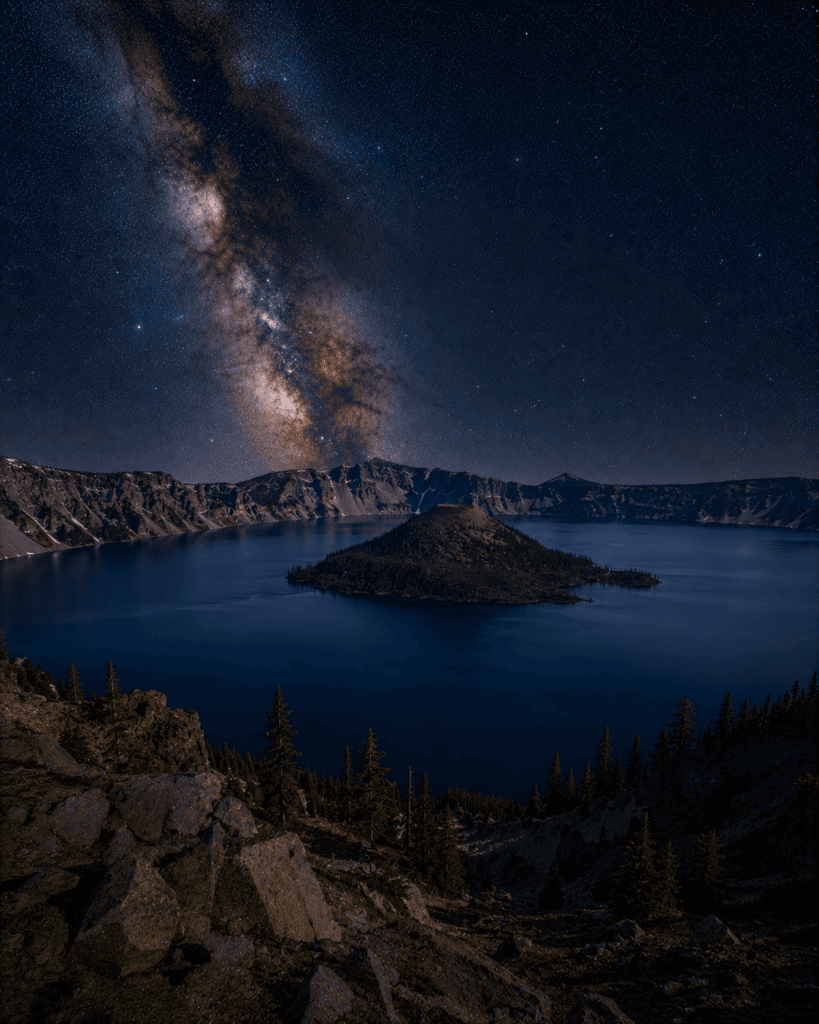
Crater Lake National Park is one of the most spectacular stargazing destinations in the Pacific Northwest. Located in southern Oregon, the park is famous for its deep blue volcanic lake, dramatic caldera walls, and remarkably dark night skies.
Far from major urban centers, Crater Lake offers exceptional opportunities to observe the Milky Way, meteor showers, planets, and thousands of stars. The combination of high elevation, clean mountain air, and minimal light pollution creates ideal conditions for astronomy and astrophotography.
For travelers seeking a unique night sky experience above one of America’s most beautiful landscapes, Crater Lake National Park is difficult to surpass.
Why Crater Lake National Park Is Great for Stargazing
Several factors contribute to Crater Lake’s reputation as one of Oregon’s best astronomy destinations.
- Minimal light pollution
- High elevation viewpoints
- Excellent atmospheric transparency
- Remote mountain location
- Outstanding Milky Way visibility
- Unique volcanic landscapes
The park’s dark skies and stunning scenery create extraordinary opportunities for both visual astronomy and night photography.
Travelers exploring astronomy destinations across the country can also browse other Dark Sky Parks.
Best Time to Visit Crater Lake for Stargazing
Spring
Spring marks the return of Milky Way season, although snow may still limit access to some areas of the park.
Summer
Summer is the most popular season for astronomy visitors. Roads are open, temperatures are comfortable, and the Milky Way is highly visible.
Travelers planning an Oregon astronomy trip should review our Best Time to See the Milky Way in Oregon guide.
Fall
Fall provides excellent visibility, fewer visitors, and crisp mountain air that benefits astrophotography.
Winter
Winter offers long nights and exceptionally dark skies, although heavy snowfall can restrict access throughout much of the park.
Best Stargazing Locations in Crater Lake National Park
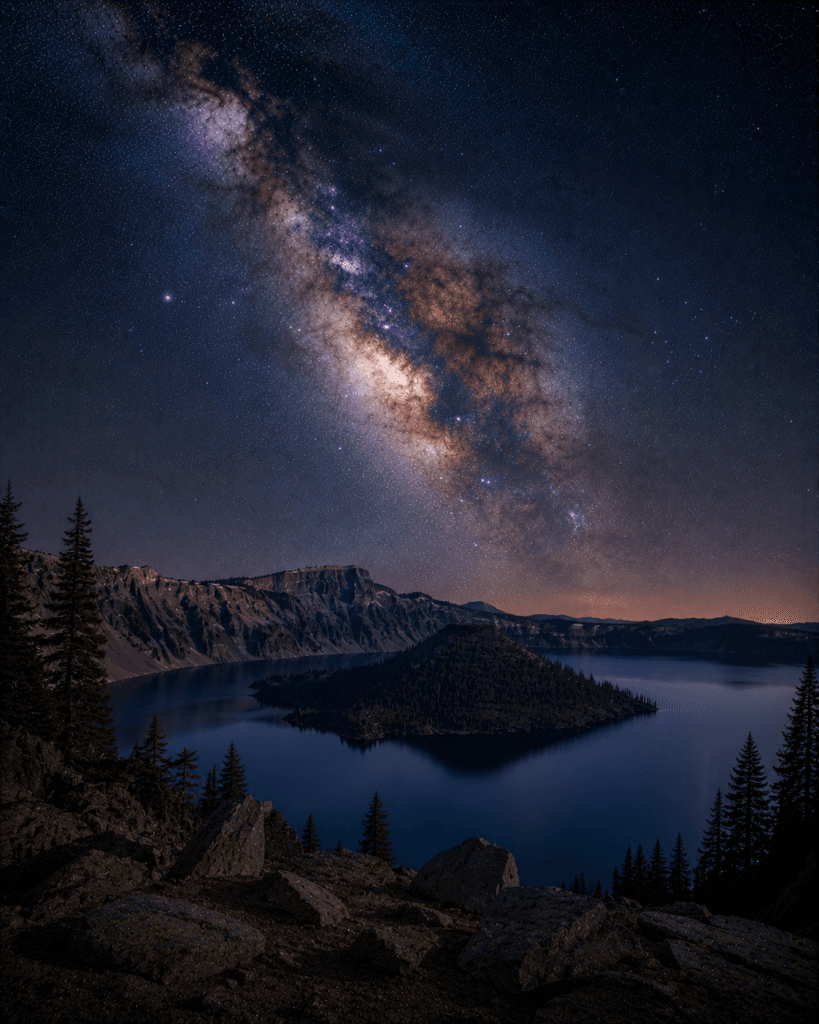
Rim Village
Rim Village offers easy access and spectacular views across Crater Lake beneath the stars.
Watchman Overlook
Watchman Overlook is one of the park’s most popular locations for Milky Way photography.
Discovery Point
This scenic viewpoint provides expansive views of the lake and surrounding caldera walls.
Cloudcap Overlook
One of the highest accessible locations in the park, Cloudcap Overlook offers exceptional visibility and dark sky conditions.
Milky Way Viewing at Crater Lake
Crater Lake National Park is one of the premier Milky Way destinations in the Pacific Northwest. The viewing season generally runs from March through October, with peak visibility occurring between May and August.
Moonless nights reveal extraordinary views of the galactic core rising above the lake and surrounding volcanic landscape.
For annual planning, review our Milky Way Viewing Calendar USA.
Astrophotography Opportunities
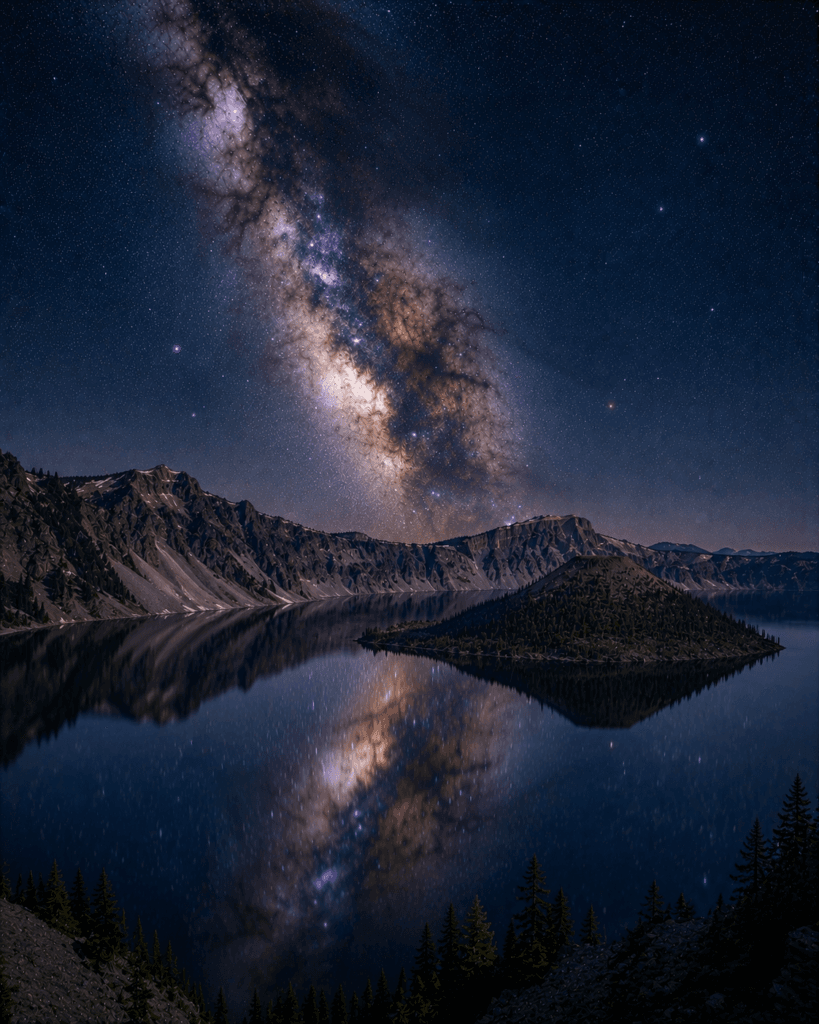
Crater Lake offers some of the most dramatic night photography opportunities in Oregon.
- Milky Way above Crater Lake
- Reflections on calm water
- Star trails above volcanic cliffs
- Meteor shower photography
- Panoramic night landscapes
The lake’s deep blue waters and surrounding cliffs create unforgettable foreground compositions.
Additional photography techniques can be found in our Astrophotography category.
Meteor Shower Viewing
Crater Lake provides excellent visibility during major annual meteor showers.
- Perseids
- Geminids
- Orionids
- Leonids
The park’s dark skies and high elevation maximize meteor visibility throughout the year.
Peak dates and forecasts are available in our Meteor Showers section.
Stargazing Tips
- Dress warmly after sunset
- Use red-light flashlights
- Check moon phases before visiting
- Monitor weather forecasts
- Carry extra camera batteries
- Allow time for dark adaptation
Temperatures at higher elevations can become surprisingly cold even during summer months.
Is Crater Lake National Park Worth Visiting?
Absolutely. Crater Lake National Park combines dark skies, volcanic scenery, and one of America’s most beautiful lakes, making it one of the top astronomy destinations in the western United States.
Visitors comparing western stargazing destinations may also wish to review our Glacier National Park Stargazing Guide.
Frequently Asked Questions
Is Crater Lake National Park good for stargazing?
Yes. Crater Lake offers dark skies, high elevation viewpoints, and excellent Milky Way visibility.
When is the best time to see the Milky Way?
The best viewing period generally runs from May through August.
Can you photograph the Milky Way over Crater Lake?
Yes. Crater Lake is one of the best Milky Way photography locations in Oregon.
What is the best stargazing location?
Watchman Overlook and Rim Village are among the park’s top astronomy locations.
Plan your trip within five nights of the new moon and choose Bortle 1–3 locations for the best Milky Way visibility.