Yellowstone National Park Stargazing Guide
Yellowstone National Park is one of America’s most iconic destinations, but many visitors overlook one of its greatest attractions: the […]
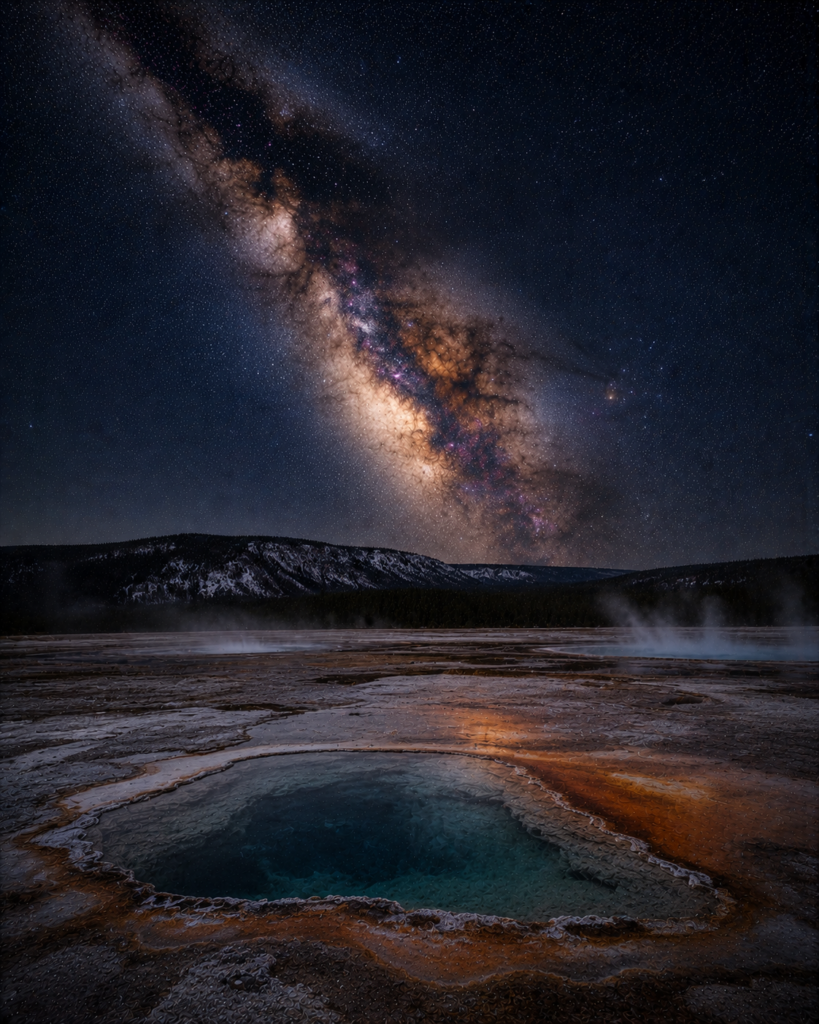
Yellowstone National Park is one of America’s most iconic destinations, but many visitors overlook one of its greatest attractions: the night sky. Beyond its geysers, hot springs, waterfalls, and wildlife, Yellowstone offers remarkably dark skies that make it an excellent destination for stargazing and astrophotography.
Spanning Wyoming, Montana, and Idaho, Yellowstone contains vast wilderness areas far from major cities. Combined with high elevations and low light pollution, these conditions create exceptional opportunities to observe the Milky Way, meteor showers, planets, and thousands of stars.
Whether you’re camping beneath the stars or photographing geothermal landscapes under the Milky Way, Yellowstone provides one of the most unique astronomy experiences in North America.
Why Yellowstone National Park Is Great for Stargazing
Yellowstone’s remote location and protected wilderness help preserve naturally dark skies throughout much of the park.
- Large protected wilderness area
- Low light pollution
- High elevation viewing locations
- Wide-open horizons
- Excellent summer Milky Way visibility
- Unique geothermal foregrounds
The combination of dark skies and extraordinary landscapes makes Yellowstone a favorite destination for night photographers and astronomy enthusiasts.
Travelers exploring America’s top astronomy destinations can also browse other Dark Sky Parks throughout the country.
Best Time to Visit Yellowstone for Stargazing
Spring
Spring offers increasing Milky Way visibility and fewer crowds than peak summer months. Snow may still be present in higher elevations.
Summer
Summer is the best season for Milky Way viewing. Warm temperatures and clear skies create ideal conditions for astronomy.
Travelers planning a Wyoming astronomy trip should review our Best Time to See the Milky Way in Wyoming guide.
Fall
Fall combines cooler temperatures with excellent atmospheric clarity and reduced visitor numbers.
Winter
Winter offers exceptionally dark skies and long nights. Snow-covered geothermal landscapes create unique night photography opportunities.
Best Stargazing Locations in Yellowstone National Park
Lamar Valley
Lamar Valley provides wide-open horizons and some of the darkest skies in Yellowstone. It is one of the park’s best locations for astronomy.
Old Faithful Area
The famous geothermal region creates unique opportunities for photographing steam features beneath the stars.
Yellowstone Lake
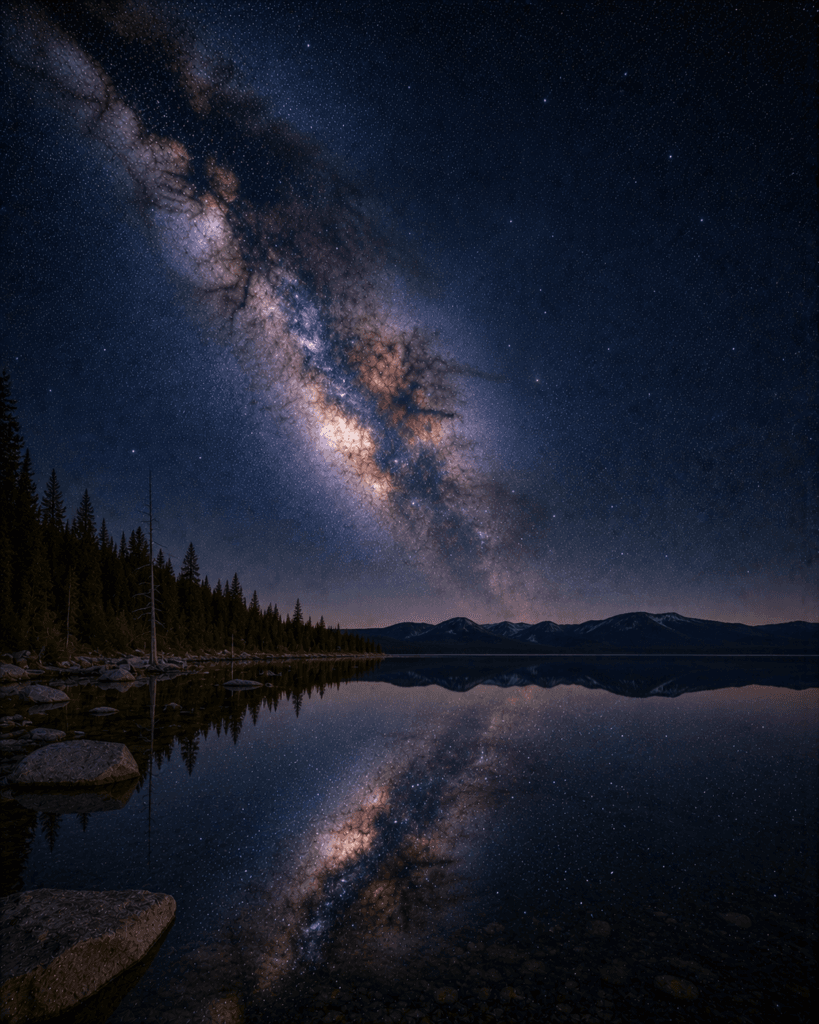
The shoreline of Yellowstone Lake offers excellent reflections and wide views of the night sky.
Mammoth Hot Springs
Mammoth Hot Springs provides distinctive foreground compositions for astrophotography.
Milky Way Viewing at Yellowstone
Yellowstone National Park is one of the best locations in the Rocky Mountain region for viewing the Milky Way. The season generally runs from March through October, with peak visibility occurring between May and August.
During moonless nights, visitors can observe the galactic core rising above forests, mountains, lakes, and geothermal features.
For annual planning, review our Milky Way Viewing Calendar USA.
Astrophotography Opportunities
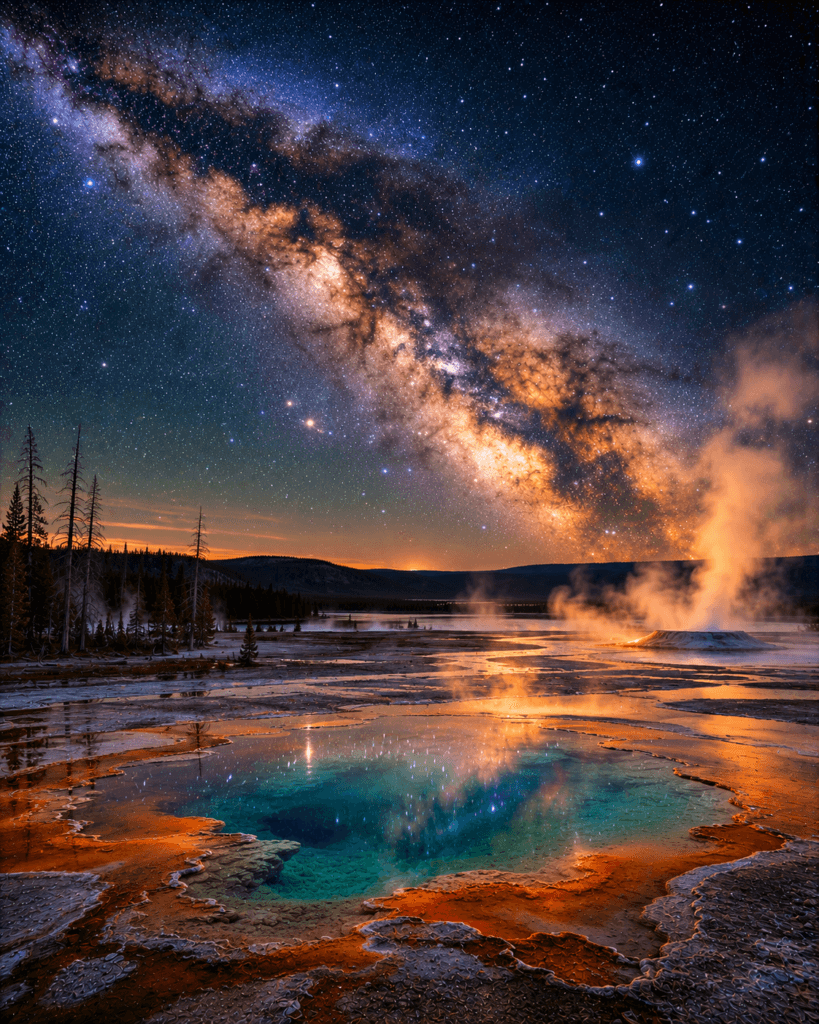
Yellowstone offers some of the most unique astrophotography opportunities in North America.
- Milky Way above geothermal basins
- Star trails over geysers
- Night photography at Yellowstone Lake
- Meteor shower photography
- Wild mountain landscapes beneath the stars
The park’s geothermal activity creates photography opportunities unavailable almost anywhere else in the world.
Additional photography techniques can be found in our Astrophotography category.
Meteor Shower Viewing
Yellowstone’s dark skies provide excellent visibility during major annual meteor showers.
- Perseids
- Geminids
- Orionids
- Leonids
Remote wilderness conditions help maximize meteor visibility during peak events.
Annual forecasts and peak dates are available in our Meteor Showers section.
Stargazing Tips
- Dress warmly after sunset
- Use red-light flashlights
- Check moon phases before visiting
- Carry extra camera batteries
- Watch for wildlife at night
- Allow time for dark adaptation
Yellowstone is active wildlife habitat, so visitors should remain aware of their surroundings during nighttime activities.
Is Yellowstone National Park Worth Visiting?
Absolutely. Yellowstone National Park combines extraordinary landscapes, abundant wildlife, geothermal wonders, and impressive dark skies. It remains one of the most unique astronomy destinations in the United States.
Visitors comparing nearby destinations may also enjoy our Grand Teton National Park Stargazing Guide.
Frequently Asked Questions
Is Yellowstone good for stargazing?
Yes. Yellowstone offers low light pollution, high elevations, and excellent Milky Way visibility.
When is the best time to see the Milky Way?
The best viewing period generally runs from May through August.
Can you photograph the Milky Way in Yellowstone?
Yes. Yellowstone is one of the best national parks in America for Milky Way photography.
What is the best stargazing location in Yellowstone?
Lamar Valley and Yellowstone Lake are among the park’s top astronomy locations.
Plan your trip within five nights of the new moon and choose Bortle 1–3 locations for the best Milky Way visibility.